
Last updated November 16, 2026
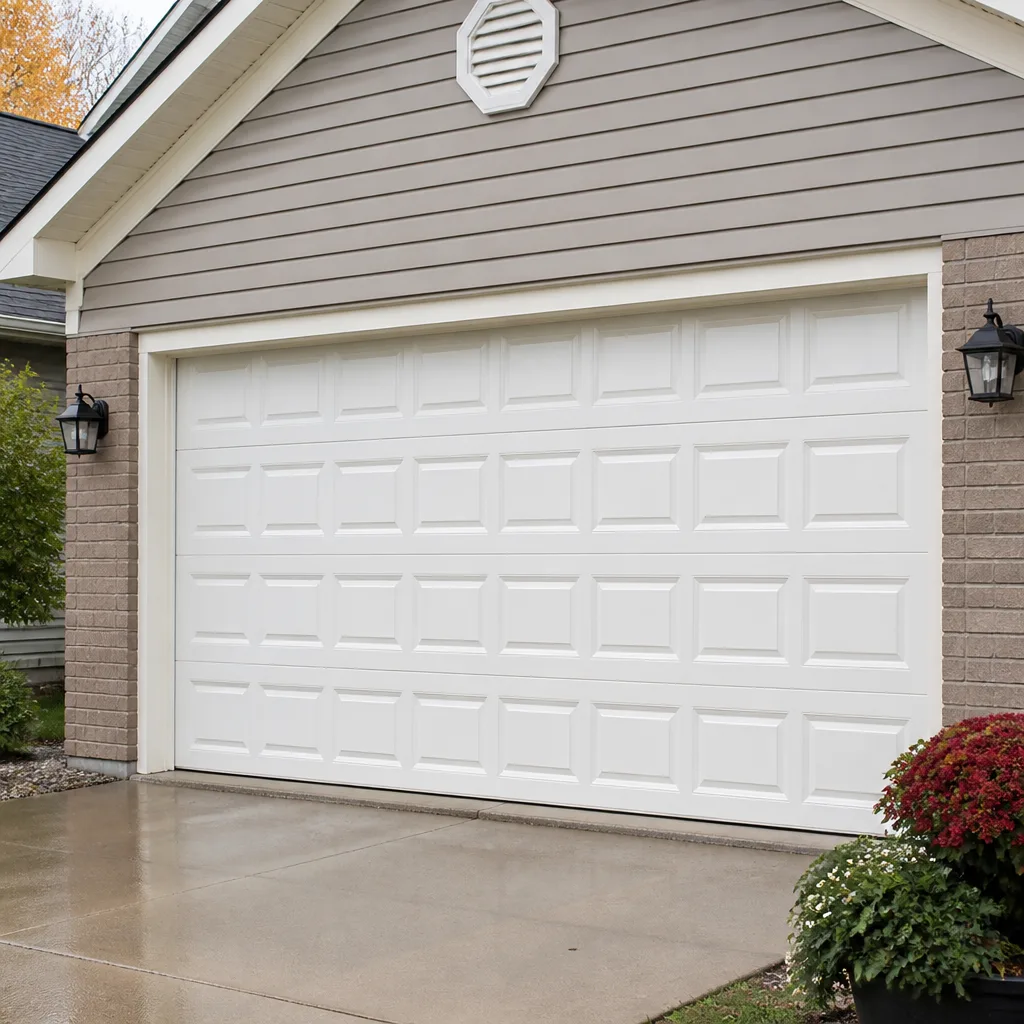 Raised-panel steel
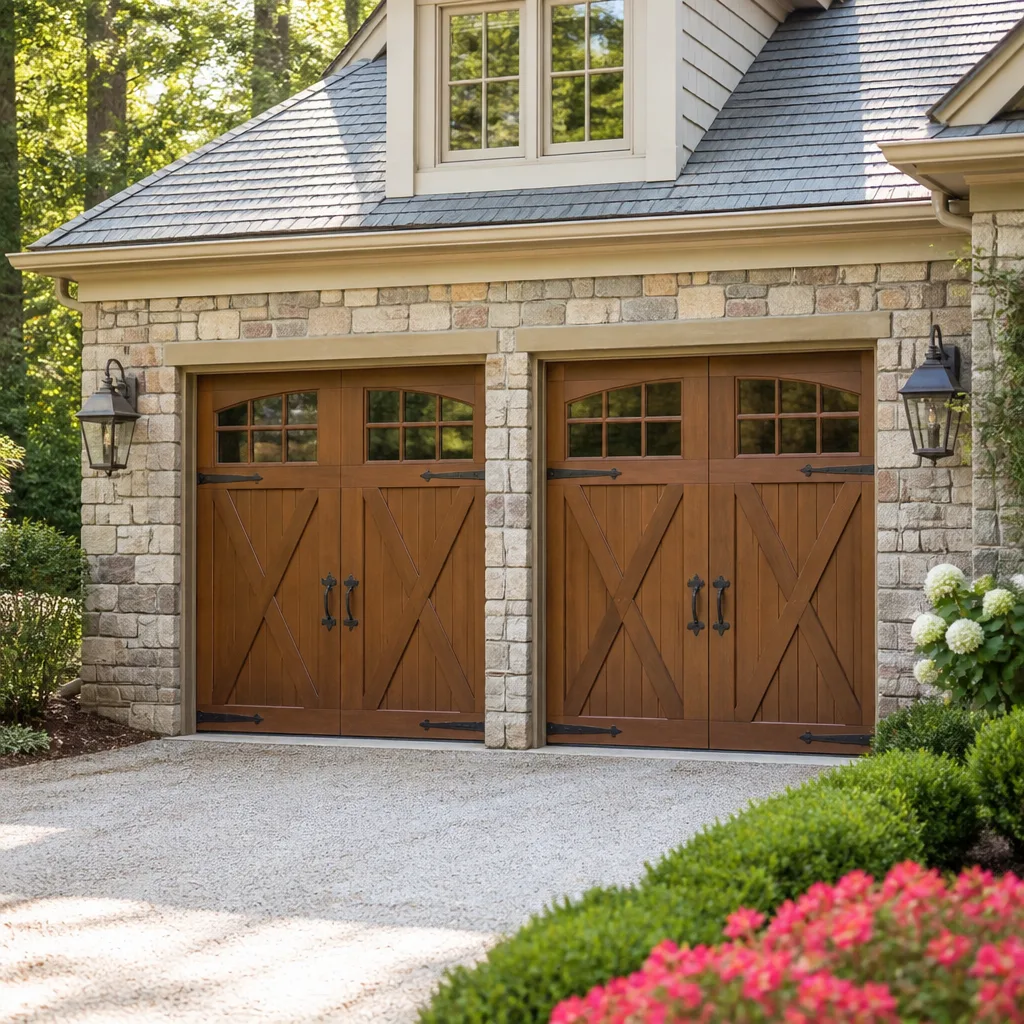 Carriage house
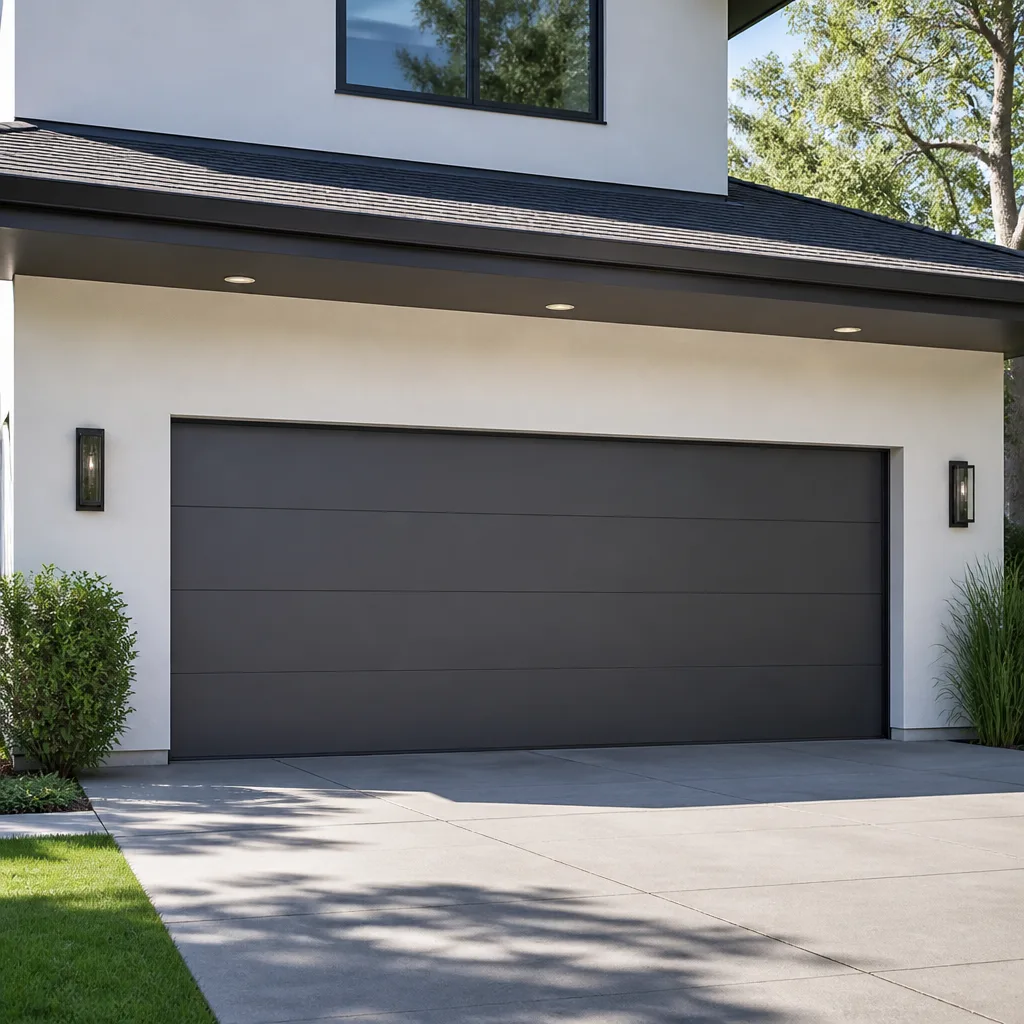 Modern flush
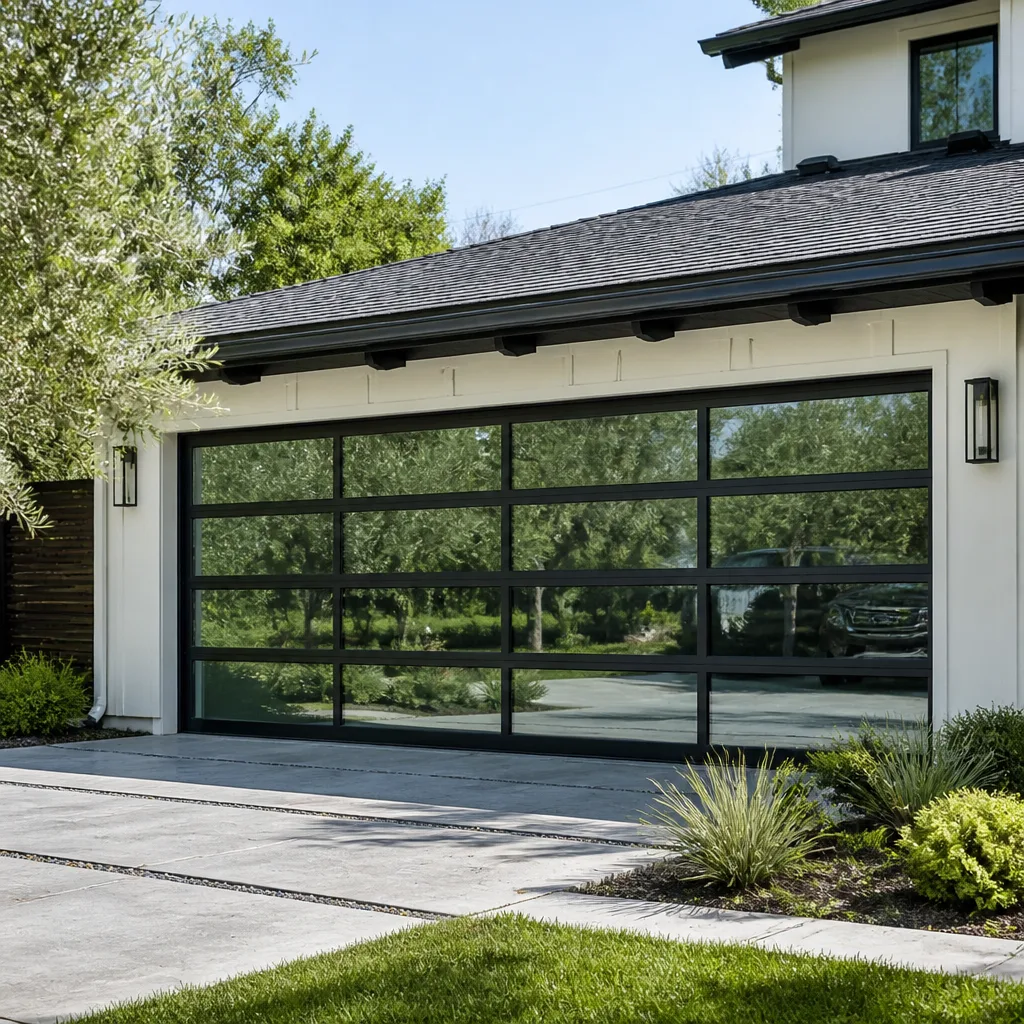 Full-view glass
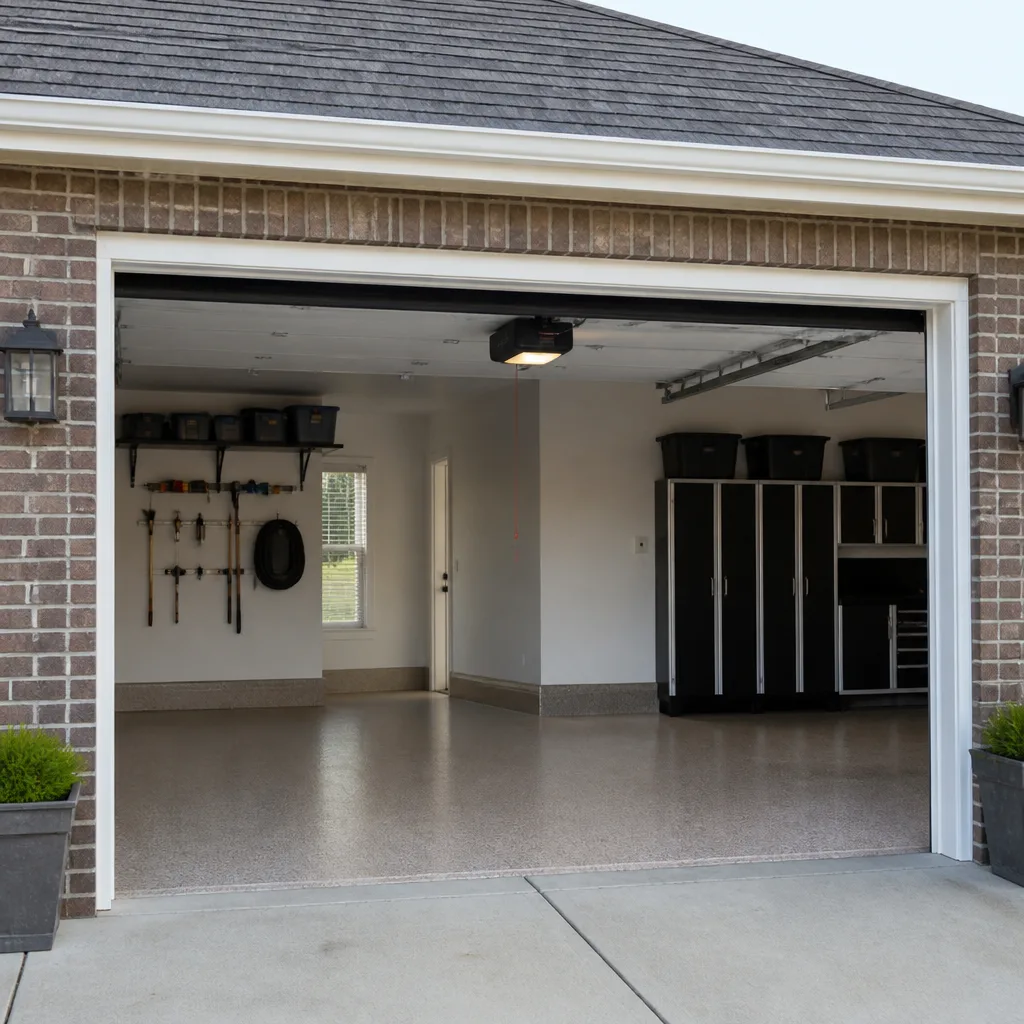 LiftMaster openers
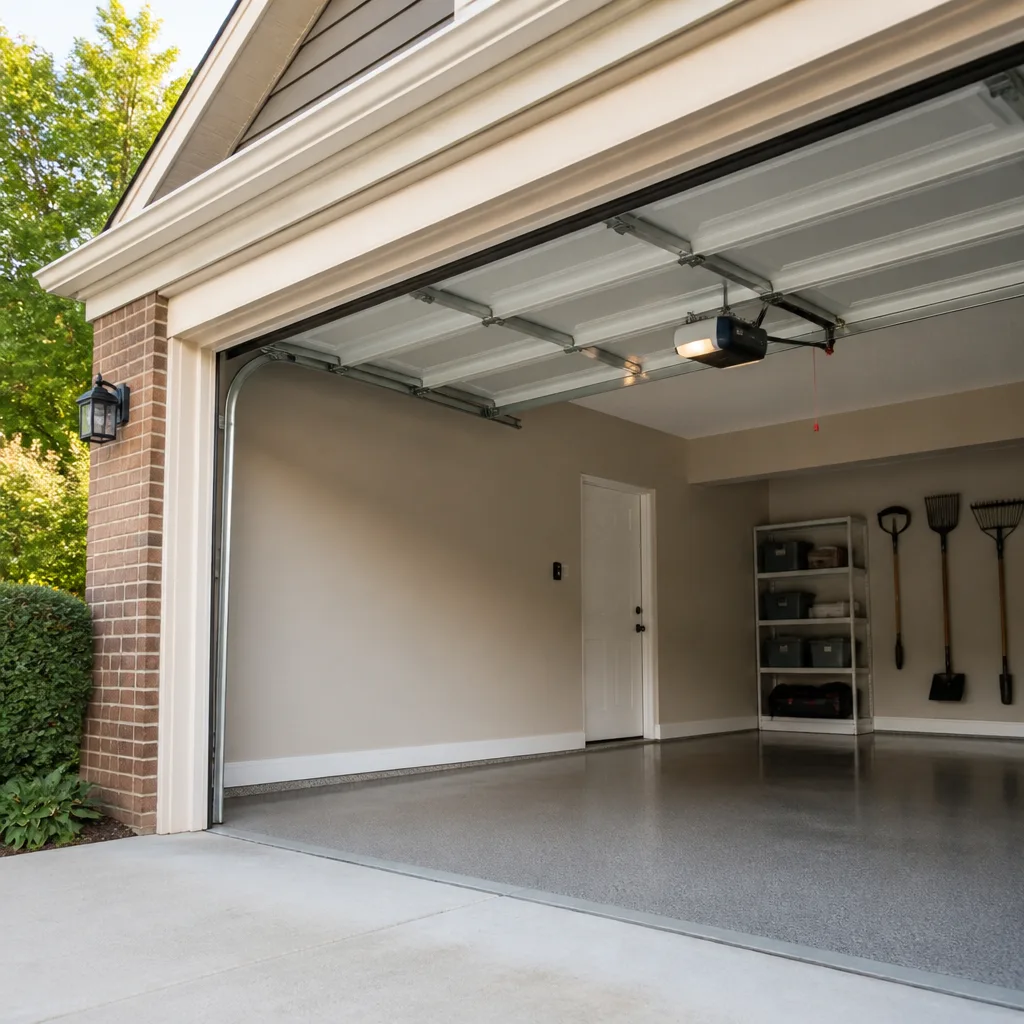 Chamberlain openers
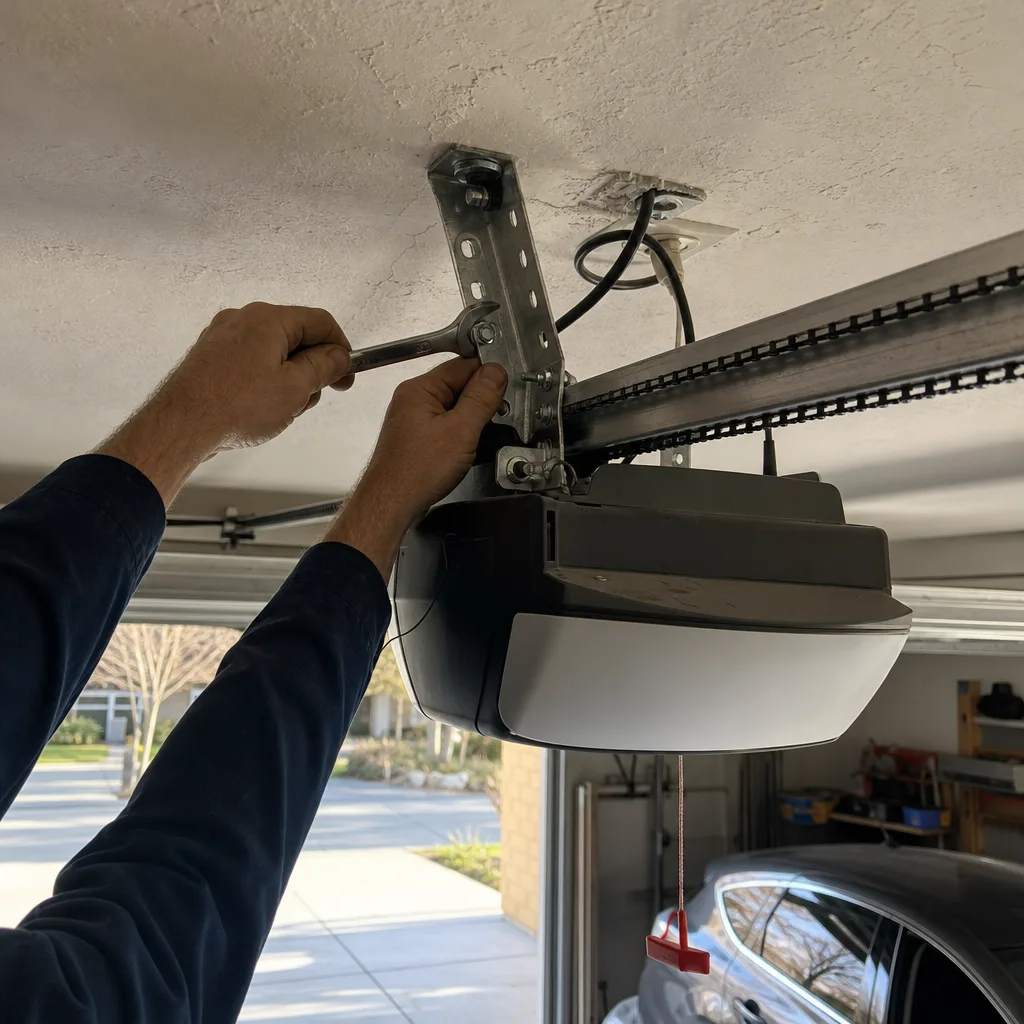
Full 25-point door and opener safety check with every visit - springs, cables, rollers, tracks, and your LiftMaster or Chamberlain opener included
You get a price before we start. It does not change when the pro arrives.
Get your free estimateHow to Hire a Garage Door Contractor in Provo: A Step-by-Step Guide
Here’s the part of garage door hiring that nobody puts on a flyer: Utah has no standalone “garage door contractor” license. The person who bids your spring replacement, your opener diagnosis, or your new door can have zero industry-specific training, and the ad will look identical to one written by a technician who has spent years on nothing but doors. In Provo, that gap matters. Alpine winds, freeze-thaw swings off the Wasatch foothills, and a housing stock that mixes older west-side garages with newer builds in the east foothills all stress springs, cables, and openers in different ways. This guide gives you a screening framework you can use on the phone, before anyone shows up, so you can tell genuine expertise from a low bid that underspecs the parts.
Quick Answer
To hire a garage door contractor in Provo, verify three things before you book: that the company specializes in garage doors and openers rather than general handyman work, that it can service your specific door and opener brands, and that it will give you a written scope of work that names spring cycle life and cable gauge rather than just a total. Ask about spring sizing on the phone – a technician who answers precisely about wire gauge and cycle life is a technician, and one who can’t is swapping parts. Confirm how the price is set: it should be quoted and agreed before any work starts, with a free written estimate.
Styles & brands we work with
- Raised-panel steel
- Carriage house
- Modern flush
- Full-view glass
- LiftMaster openers
- Chamberlain openers
Table of Contents
- Utah Licensing: What It Tells You and What It Doesn’t
- The Four Questions That Expose Low-Skill Bidders
- Red Flags Specific to the Provo Market
- How to Compare Quotes Correctly
- What a Proper Written Scope of Work Must Include
- Why Spring Sizing Is the Real Credential Test
- Your Opener Is a Separate System: Screen for It Separately
- Common Mistakes to Avoid
Utah Licensing: What It Tells You and What It Doesn’t
A Utah general contractor’s license tells you a business has met the state’s requirements for contracting work. It does not tell you the person at your door has ever sized a torsion spring, set a drum, or tensioned a cable correctly. That’s the reality homeowners run into across Provo, and it’s why the license check is step one, not the whole story.
The license matters because it signals a business that carries insurance and can be held accountable. Ask for the license number and, separately, for a certificate of insurance naming the work being done at your address. We’re insured and bonded, and we expect that question.
What actually predicts competent garage door work is narrower:
- IDEA certification. The Institute of Door Dealer Education and Accreditation certifies individuals in the trade. It’s voluntary, which is exactly why it’s worth asking about – not every technician has it, and those who do chose to.
- Manufacturer training. Opener and door manufacturers train technicians on their own products. A technician trained on LiftMaster or Chamberlain systems knows the diagnostic codes, the travel limits, and the force settings that a general tinkerer won’t.
- Brand coverage. Ask which brands the company services. A specialist trained across the major door and opener brands won’t hand you off because your door says Clopay or your opener says Genie.
- Single-trade focus. A company that does garage doors and also decks, fences, and drywall is spreading its training thin. One trade, done properly, is the signal you want.
In our experience, homeowners who ask about manufacturer training and brand coverage get a much clearer read on a bidder than the ones who only ask about price. Our technicians have up to 14 years of experience, and the difference between that and a first-year handyman shows up in the questions they ask you before they quote.
The Four Questions That Expose Low-Skill Bidders
You can screen most of a bidder’s competence in a five-minute phone call. These four questions separate technicians from parts-swappers, and a competent company should answer each without hesitation or a callback.
- “What’s the wire gauge on the spring you’d use, and what’s its cycle life?” A torsion spring is defined by wire gauge and inside diameter, and its cycle rating tells you how many open-and-close cycles it’s built for. A bidder who quotes “a spring” without those numbers is quoting a part he buys by price, not by spec.
- “Is this a one-spring or two-spring door, and what’s the matched pair?” Most garage doors use a pair of springs balanced together. A bidder who doesn’t ask or check whether both need replacing hasn’t looked at the door closely enough to quote it.
- “Which opener brands do you service, and do you do diagnostics?” If the answer is “we’ll take a look” rather than a list of brands and a diagnostic process, the opener is probably an afterthought. Openers are motorized drive systems with their own logic boards and sensors, and they need dedicated training.
- “Can you give me a written scope of work before I commit?” A company that quotes in a text message and works from memory is one dispute away from a problem. A written scope is the single best protection you have.
Ask these before anyone comes out. A bidder who answers all four cleanly has earned the trip. One who hedges on spring sizing or can’t name a single opener brand is showing you what the work will be like.
Call (877) 526-0732 and we’ll answer these questions on the phone. We answer 24/7.
Red Flags Specific to the Provo Market
Provo’s garage door market has its own patterns, and some of the warning signs are local. The city sits between Utah Lake and the Wasatch foothills, with neighborhoods like the Tree Streets, Edgemont, and Grandview drawing a mix of long-established homes and newer construction. Each of those pockets has its own door and opener vintage, and a bidder who’s never laid eyes on your door type but sounds confident on the phone is a risk.
Watch for these:
- Vague business address. If the company’s address is a residential street with no suite or a PO box, that’s not automatically disqualifying, but it means you can’t verify where they operate from. Ask for a business name you can look up and a license number.
- Out-of-state phone routing. A number that routes to a call center in another state may still dispatch a local technician – but the person quoting you isn’t the person who’ll assess your door. Specialists quote and assess in the same conversation.
- Bids without spring IPPT or cable gauge. A torsion spring is specified by inside diameter (ID) and wire gauge, and sometimes by cycle life. A bid that says “replace spring” without those details is quoting a part, not a repair.
- No written estimate. Any delay in putting the scope in writing is a delay in accountability. Free estimates that arrive as a text with a dollar figure and no detail are not estimates.
- Pressure to sign the same day on a full door replacement. A new door needs measuring, ordering, and scheduling. A company rushing you is not measuring your door correctly and probably not ordering a door that fits it.
- Quotes that don’t separate the door from the opener. Your garage has two separate systems – the door and hardware, and the opener. A single vague number that covers both without breaking them down can’t be compared to anything.
None of these makes a bidder a bad actor on its own. A cluster of them does.
How to Compare Quotes Correctly
The lowest bid is usually the one with the shortest spec sheet. That’s not a knock on efficiency – it’s a reflection of what got left out. A $100 difference between two spring quotes might be the difference between a standard-cycle spring and one with a much longer cycle life, or between a matched pair and a single replacement on a two-spring door.
Compare on these lines, side by side:
- What’s being replaced. Spring and spring, cable and cable, roller and roller. Vague line items hide underspec.
- Part specifications. Spring wire gauge, inside diameter, and cycle life. Cable gauge and length. Roller type. Hinge gauge if hinges are in scope.
- Labor scope. Does the quote state what the technician will do on-site, including balancing the door, checking the opener force settings, and testing safety sensors?
- Whether it’s quoted and agreed before work starts. The written estimate should set the price. If the number can move once the door is open, you don’t have a price yet – you have an opening bid.
- Who exactly does the work. A contractor who subs the work to another company isn’t the same as a specialist who does the work themselves.
Provo garage doors take a beating from the freeze-thaw cycle. Springs fatigue faster when a door is opened repeatedly in cold, heavy conditions, and doors that face south or west sit in more sun. A bidder who measures wire gauge and matches the spring to the door weight is quoting for the long haul. One who eyeballs the door is quoting for today.
What a Proper Written Scope of Work Must Include
A written scope of work is your insurance against a dispute. If it’s not on the paper, it didn’t get agreed – and in a trade where springs, cables, and openers all interact, the disputes that arise are usually about something the scope should have covered.
Before you sign anything, the scope should name:
- The exact parts and their specs. Spring gauge, ID, and cycle life. Cable gauge. Roller and hinge details if in scope. Brand and model for any opener part.
- The number of parts. One spring or a matched pair. One roller or all of them. Ambiguity here is where the invoice changes.
- What labor includes. Removal, installation, tensioning, balancing, and testing. If the scope doesn’t say the door was balanced and tested, ask whether it’s included.
- The opener check. On a repair, the technician should verify opener force and travel settings after balancing the door. A new spring changes the load the opener sees; the settings need to match.
- Price and payment terms. The written estimate is the price. Get the total in writing and confirm whether it’s an estimate subject to change or a fixed number.
- Cleanup and haul-away. Old springs and cables don’t belong on your curb.
On a new door installation, the scope should also cover measuring, ordering, and scheduling, because those are separate steps from the install itself. Installation takes time – it’s not a same-day reactive service – so a bidder who promises a new door tomorrow is a bidder who hasn’t measured yours. We’ll come measure, recommend a door, and put a written price in front of you, and it’s a free estimate.
Why Spring Sizing Is the Real Credential Test
Spring sizing is the quiet credential test because it’s the part of the trade generalists skip. A torsion spring is a mechanical component defined by its wire gauge, its inside diameter, and the number of coils – and those dimensions determine how much lift it provides and how long it lasts. Get any one wrong, and the door won’t balance, the opener will strain, and the spring will fail early.
Doors are balanced by weight. A technician who doesn’t measure the door weight and the door’s geometry is guessing at the spring.
Safety note: high-tension torsion springs and the cables under load are among the most dangerous components on a residential property. A relaxed torsion spring can release stored energy suddenly, and cable tension can cause serious injury. This is not a DIY job, and we don’t recommend any homeowner attempt to adjust, remove, or replace a spring or cable themselves. A trained professional has the tools and the training to do this safely.
What to look for in the bid, not what to do yourself: a spring quote that names wire gauge and cycle life, a quote that addresses whether the door has one spring or a matched pair, and a technician who checks the balance of the door before recommending replacement. Our technicians have up to 14 years of experience, and they size springs to the door, not to the price sheet.
When a spring fails, call (877) 526-0732. We answer 24/7. Fast dispatch from 7am to 7pm.
Your Opener Is a Separate System: Screen for It Separately
The most common hiring mistake in Provo is treating the garage door and the garage door opener as one thing. They’re separate systems that interact: the door and its hardware is one mechanical assembly, and the opener is a motorized drive system with a logic board, safety sensors, travel limits, and force settings. A technician who’s great at door hardware may have no real diagnostic training on openers, and vice versa.
Screen for opener competence with the same questions you’d ask about any electrical and mechanical system:
- Which opener brands do you service? A company trained across the major drive brands covers most garages. We service LiftMaster, Chamberlain, Genie, Clopay, Amarr, Wayne Dalton, Craftsman, and Raynor – the two separate systems in your garage, in one call.
- What does diagnosis look like? A good opener diagnosis starts with reading the unit’s own codes and checking the safety sensors and travel limits, not just swapping the remote battery and calling it fixed.
- Are the opener’s force and travel settings checked after door work? A new spring changes the load. The opener’s settings need to match the new balance or the opener will wear.
- Is the repair and the installation done by the same specialist? A company that hands you off between a door contractor and an opener contractor is a company that doesn’t specialize in both.
A door that’s out of balance can make a perfectly healthy opener strain and eventually fail. That’s why a specialist checks both systems in one visit rather than treating the opener as a separate job to refer out. For a deeper walkthrough of what that diagnostic looks like, see our garage door opener repair page.
One call covers the door, the hardware, and the opener. Eight brands. One specialist.
Common Mistakes to Avoid
- Hiring a general handyman for spring work. High-tension springs need trade-specific training and tools. A handyman who does everything is a handyman who hasn’t drilled into this one. Ask the spring sizing question and listen.
- Taking the lowest bid without reading the spec. A short spec is a cheap bid. Compare wire gauge, cycle life, and whether the spring quote covers a matched pair, not just the dollar figure at the bottom.
- Treating the opener as an afterthought. If the door repair is done but the opener isn’t checked, the door may come back. Confirm the scope includes verifying force and travel settings.
- Accepting a text-message quote. A price without a written scope of work is an opening bid, not an estimate. Before you commit, get the parts, the quantities, and the labor in writing.
- Hiring based on a phone number you can’t trace. A routing center in another state may not send the technician who assessed your door. Specialists quote and assess the same job.
- Assuming a new door installs like a repair. Installation needs measuring and ordering first. A bidder who promises a new door the next day hasn’t measured the opening and hasn’t ordered the right size.
- Ignoring the second spring on a two-spring door. When one spring of a matched pair fails, the other has usually lived the same life. Replacing one alone often means the second one fails soon after – ask the bidder to address it.
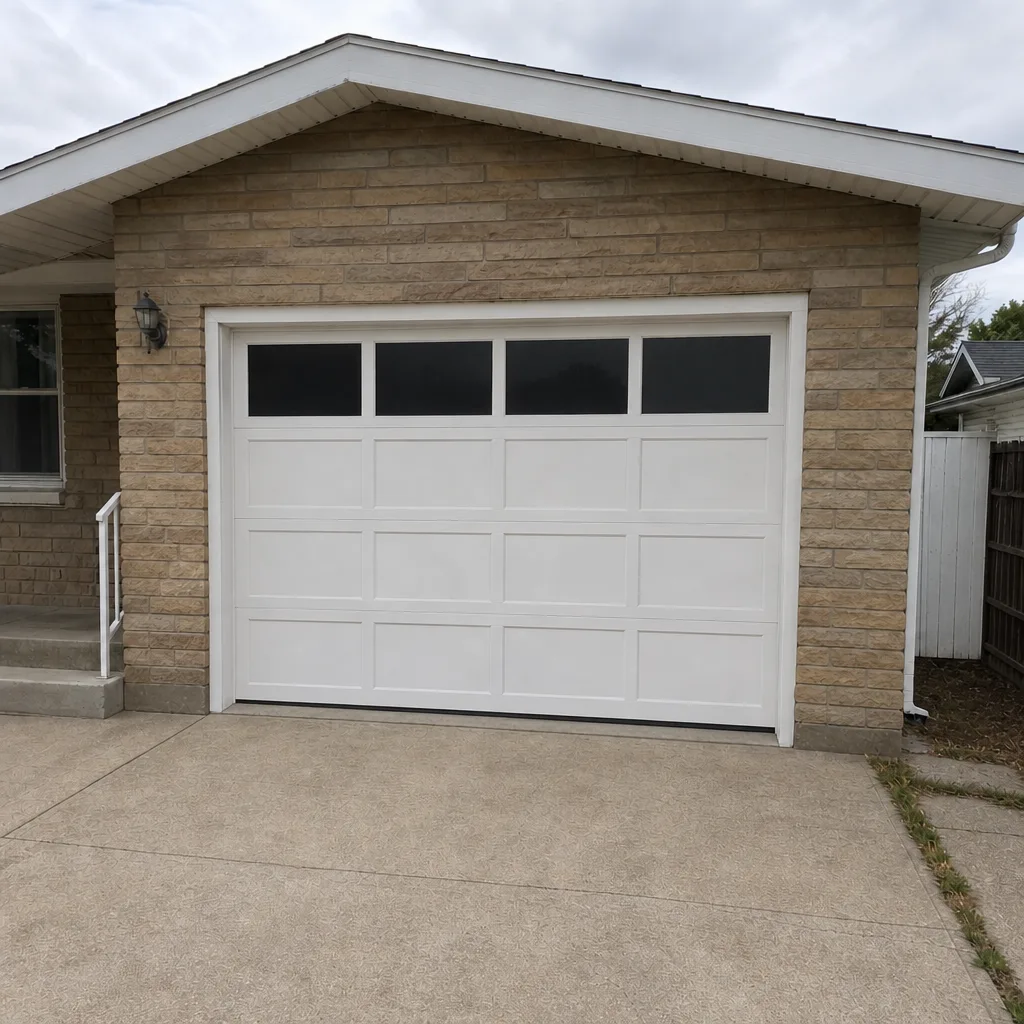
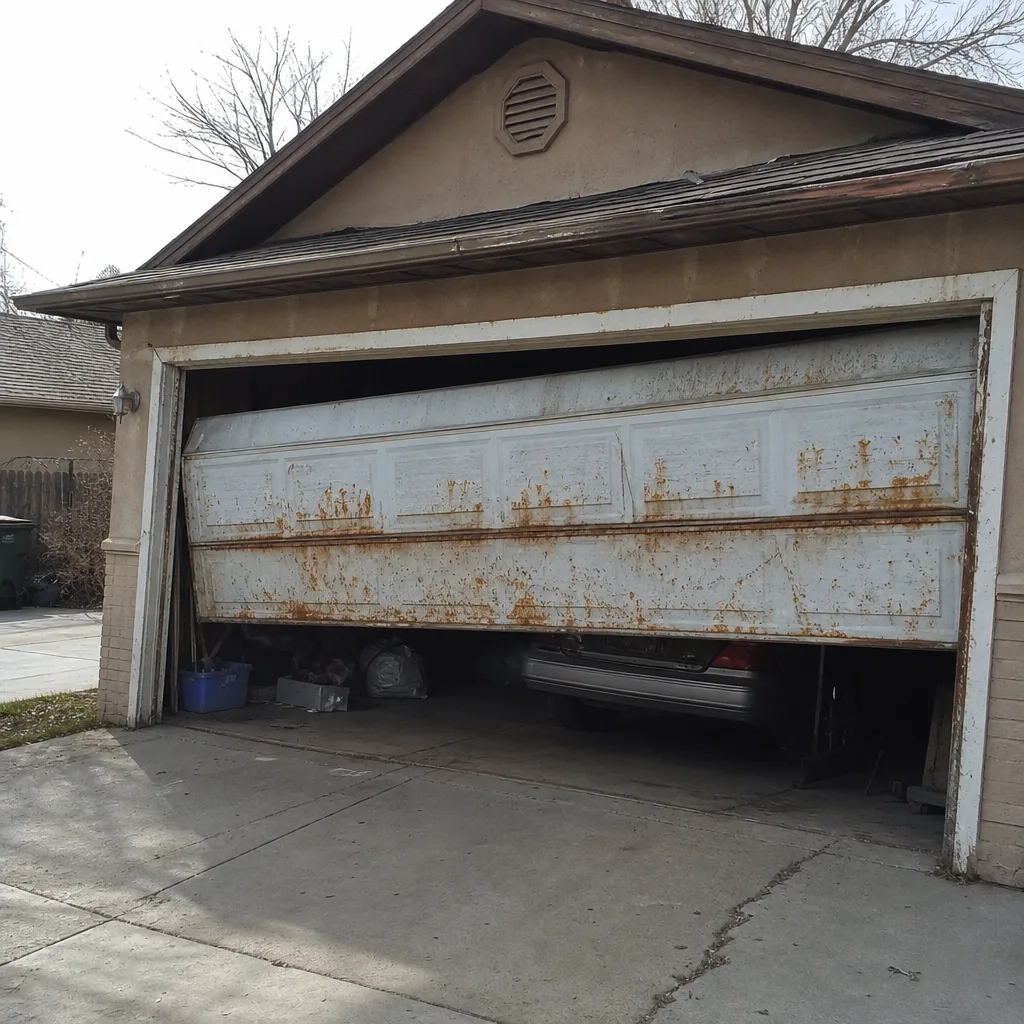
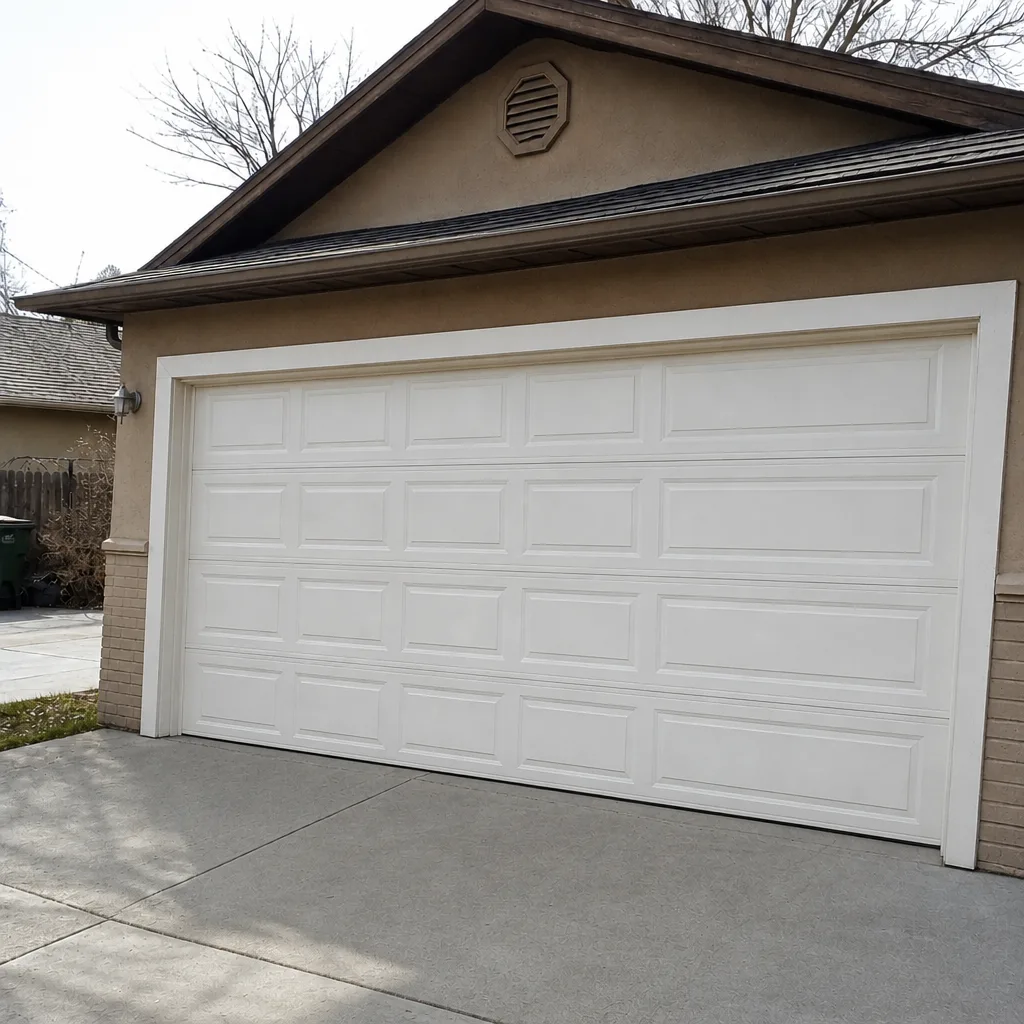
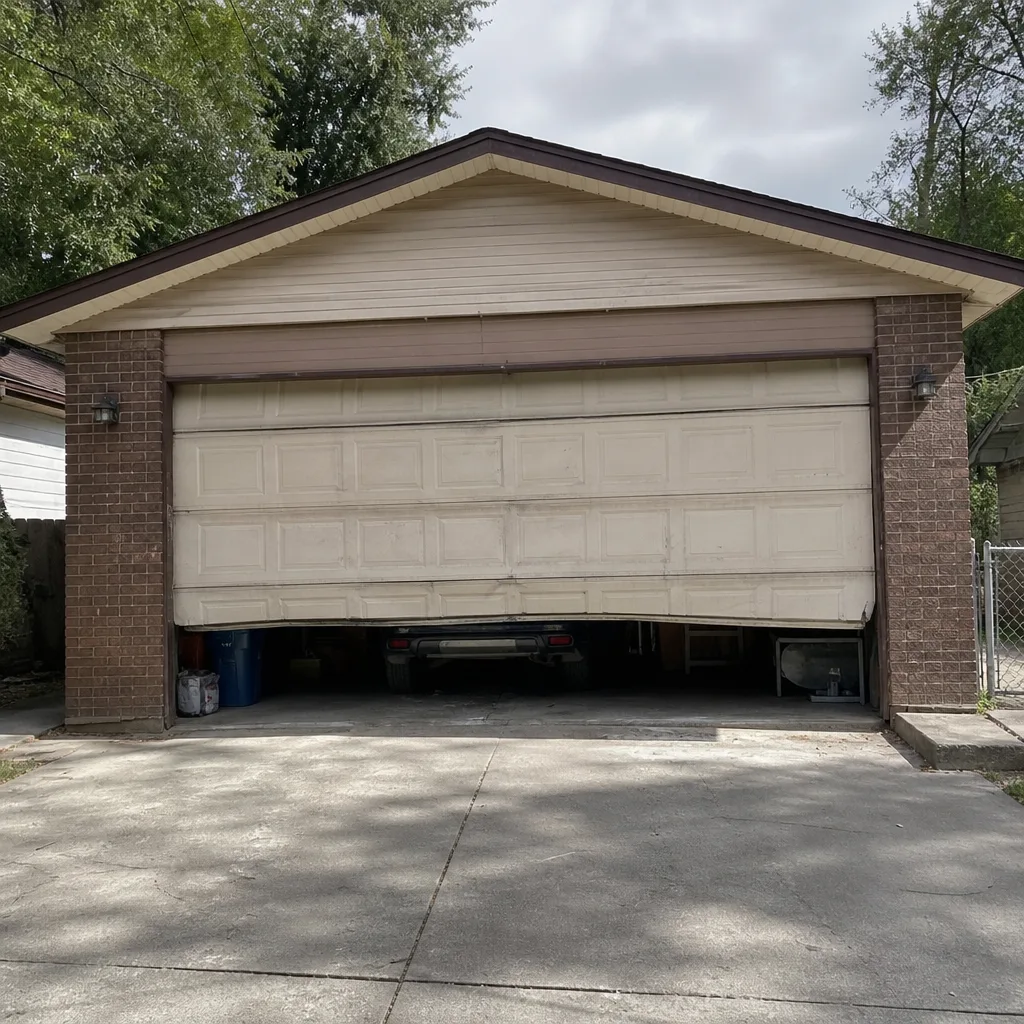
See the difference
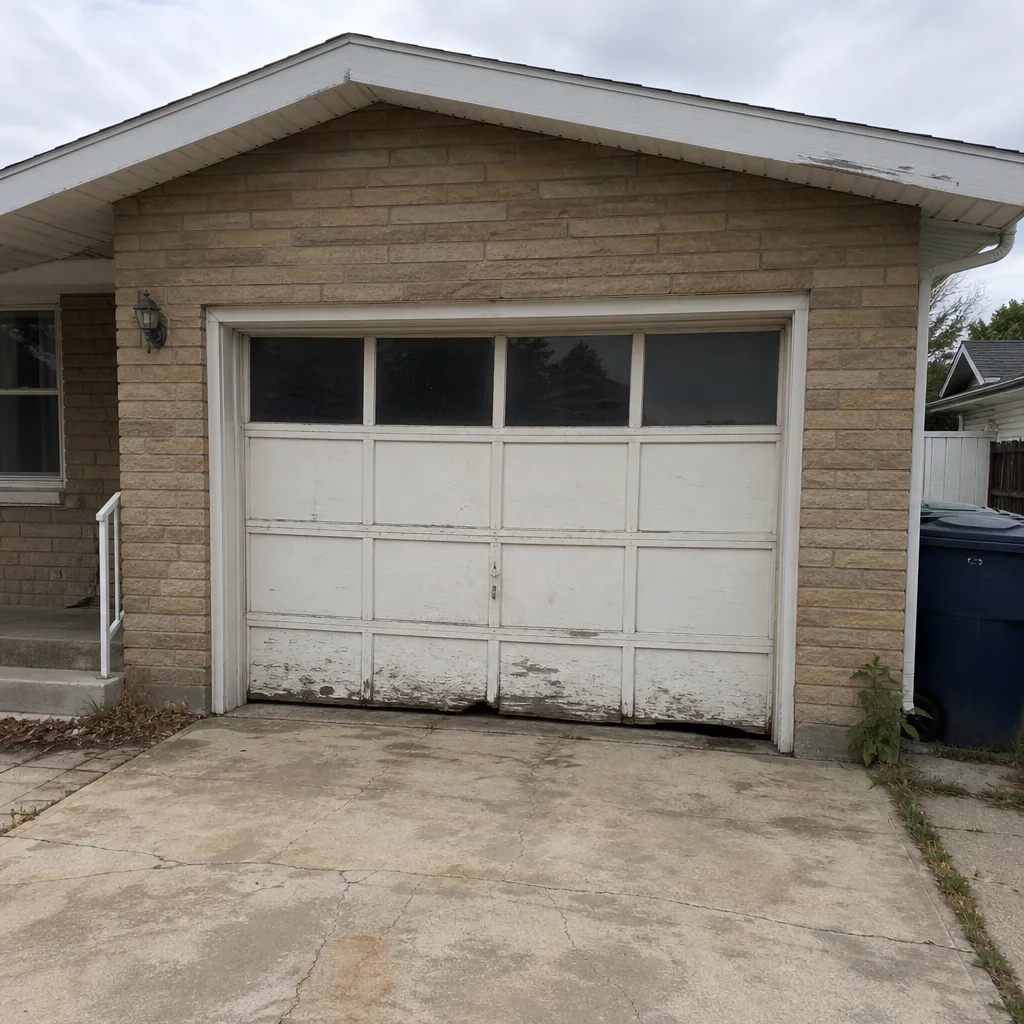 Before
 After
 Before
 After
 Before
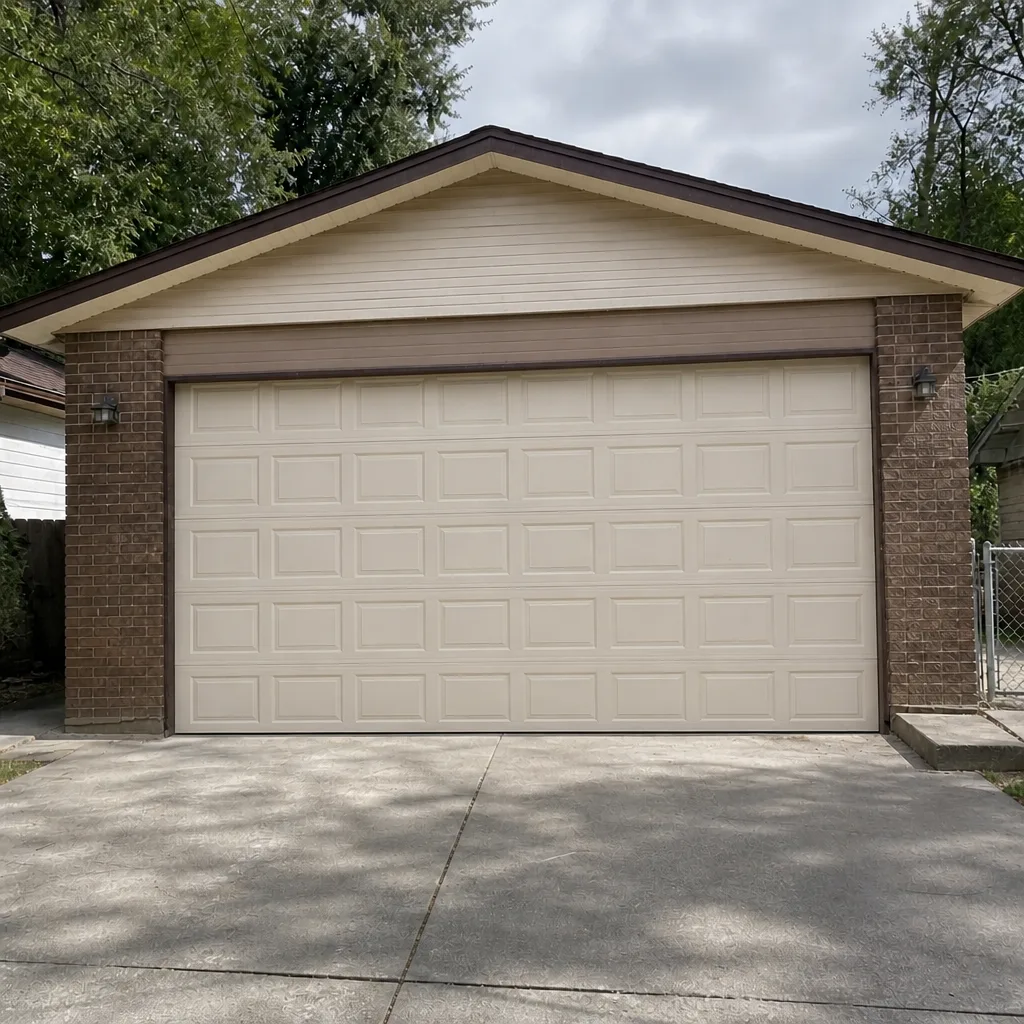 After
When to Call a Professional
Some garage door problems are clearly jobs for a trained technician, and some are judgment calls. Call a professional when a torsion spring breaks (you’ll hear a sharp bang and the door won’t lift), when a cable comes off its drum or looks frayed, when the door is visibly off its tracks or hangs crookedly, or when the door won’t balance – it lifts a foot and drops, or it sags open. Call when the opener runs but the door doesn’t move, when the door reverses immediately on closing, or when the safety sensors keep tripping. Call when the door is old enough that hinges and rollers are grinding, and call before a door that’s struggling gets used more and the damage compounds.
What you shouldn’t do is attempt spring or cable work yourself. The stored energy in a torsion spring is dangerous, and a mistake can cause serious injury. Provo Garage Door Service offers free estimates in Provo – call (877) 526-0732. We’re licensed and insured, we answer 24/7, and fast dispatch runs from 7am to 7pm.
Frequently Asked Questions
Utah doesn’t issue a standalone garage door contractor license, so the license question is really the general contractor license and insurance question, and it’s worth asking. Ask for the license number and a certificate of insurance, then ask about IDEA certification and manufacturer training, because those are the credentials that speak directly to garage door competency. A licensed, insured business with trade-specific training is the combination you want.
Spring repair in Provo is priced per job by a written estimate, and the estimate is free. Spring pricing depends on the spring’s wire gauge, cycle life, and whether your door uses a single spring or a matched pair – and a matched pair is usually replaced together. A written estimate will name the spring spec, the quantity, and the labor scope before any work starts. Call (877) 526-0732 for an exact quote.
Same-day service is often possible for repair calls, including a door that won’t close. We answer 24/7, and fast dispatch runs from 7am to 7pm, Sunday through Friday. A call outside dispatch hours is booked into the next opening, Sunday through Friday, 7am to 7pm. Call (877) 526-0732 to get scheduled.
The written estimate sets the price, and any work is quoted and agreed before it starts. If the technician finds something the phone conversation didn’t reveal, that gets talked through and agreed before the work proceeds – never added afterward. Ask for the scope in writing up front; that’s what keeps the price where it belongs. Call (877) 526-0732 and we’ll walk you through it.
We’re licensed and insured, and we work with independent local professionals who perform the work. Our technicians have up to 14 years of experience, and our focus is garage doors and openers – not general handyman work. Ask us for the certificate of insurance and the license number before booking; a specialist expects that question.
Repair usually makes sense when the door panels and structure are sound and the problem is a spring, cable, roller, or opener. Replacement makes sense when panels are damaged beyond repair, the door no longer fits its opening, or the door’s age and wear mean repairs are stacking up. A proper assessment comes before a recommendation. Repair or replace – we’ll tell you which one actually makes sense, and a replacement starts with a free measure and a written price. Call (877) 526-0732.
The Bottom Line
Hiring a garage door contractor in Provo comes down to a few checks you can run before anyone shows up. Confirm the company specializes in garage doors and openers, ask which brands they service, and ask the spring sizing question on the phone – wire gauge, cycle life, single or matched pair. Then insist on a written scope of work that names the parts, the quantities, and the labor, and confirm the price is quoted and agreed before work starts. That’s how you filter out the bid that underspecs, the call center that can’t assess your door, and the handyman who’s never sized a spring. Provo Garage Door Service is licensed and insured, services LiftMaster, Chamberlain, Genie, Clopay, Amarr, Wayne Dalton, Craftsman, and Raynor, and offers free estimates across Provo.
Call (877) 526-0732 for a free estimate. We answer 24/7. Fast dispatch from 7am to 7pm, Sunday through Friday. Repair or replace – we’ll tell you which one actually makes sense.
For more on the specific work we do, see garage door repair and learn more about Provo Garage Door Service.
Written by the team at Provo Garage Door Service.