
Last updated November 16, 2026
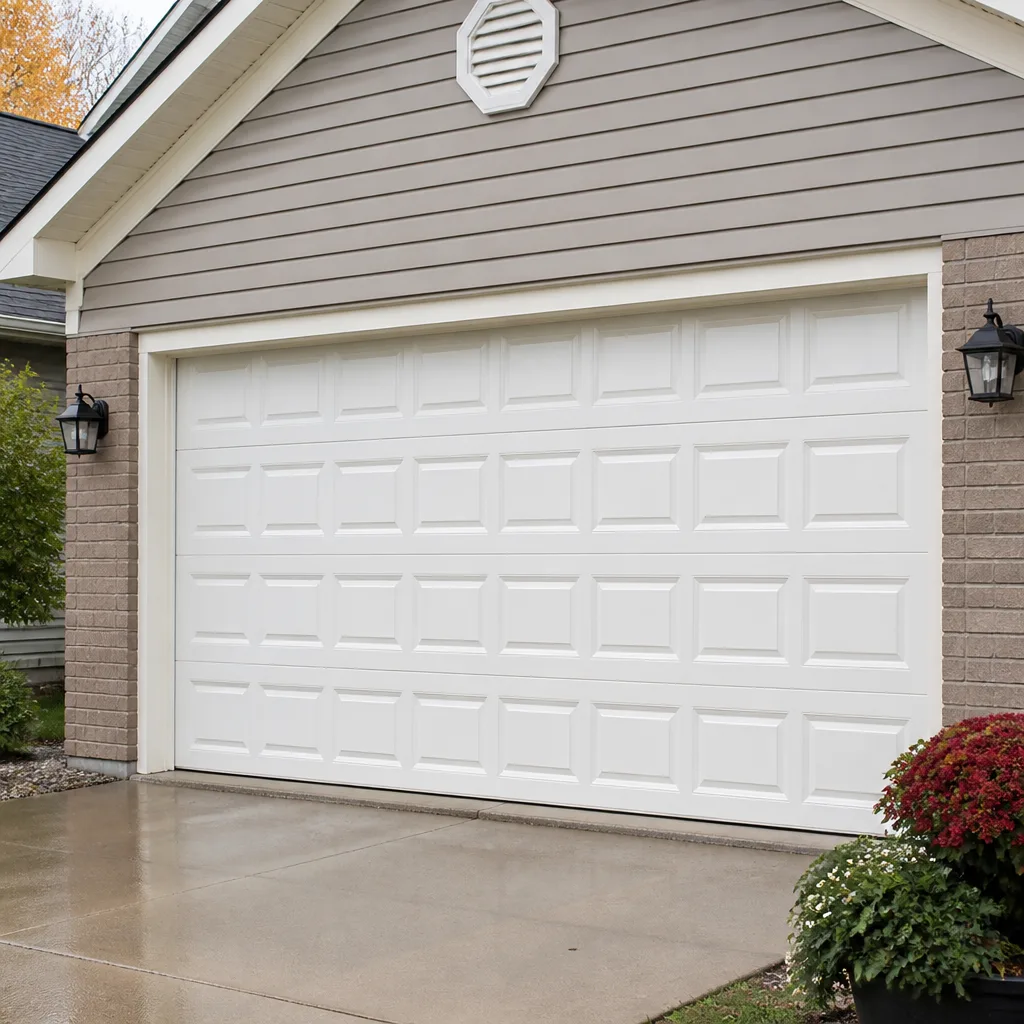 Raised-panel steel
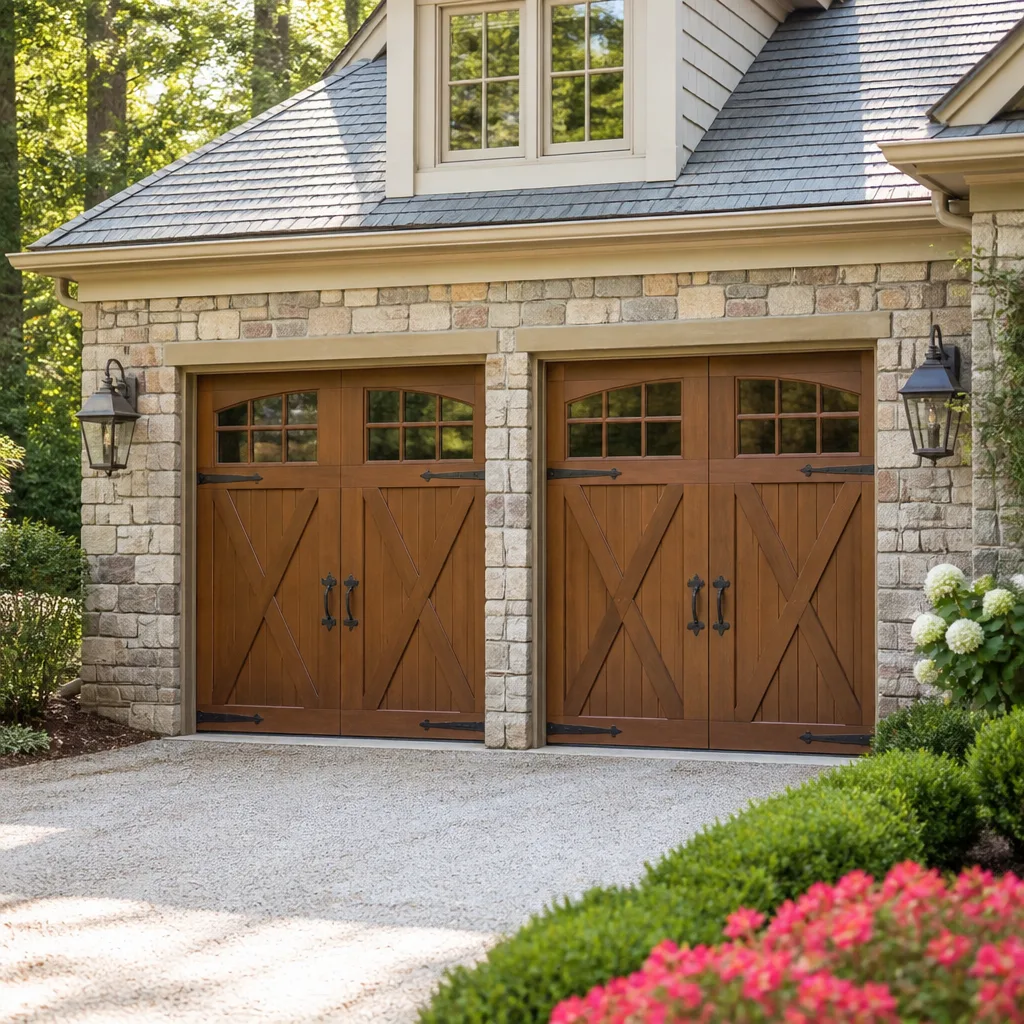 Carriage house
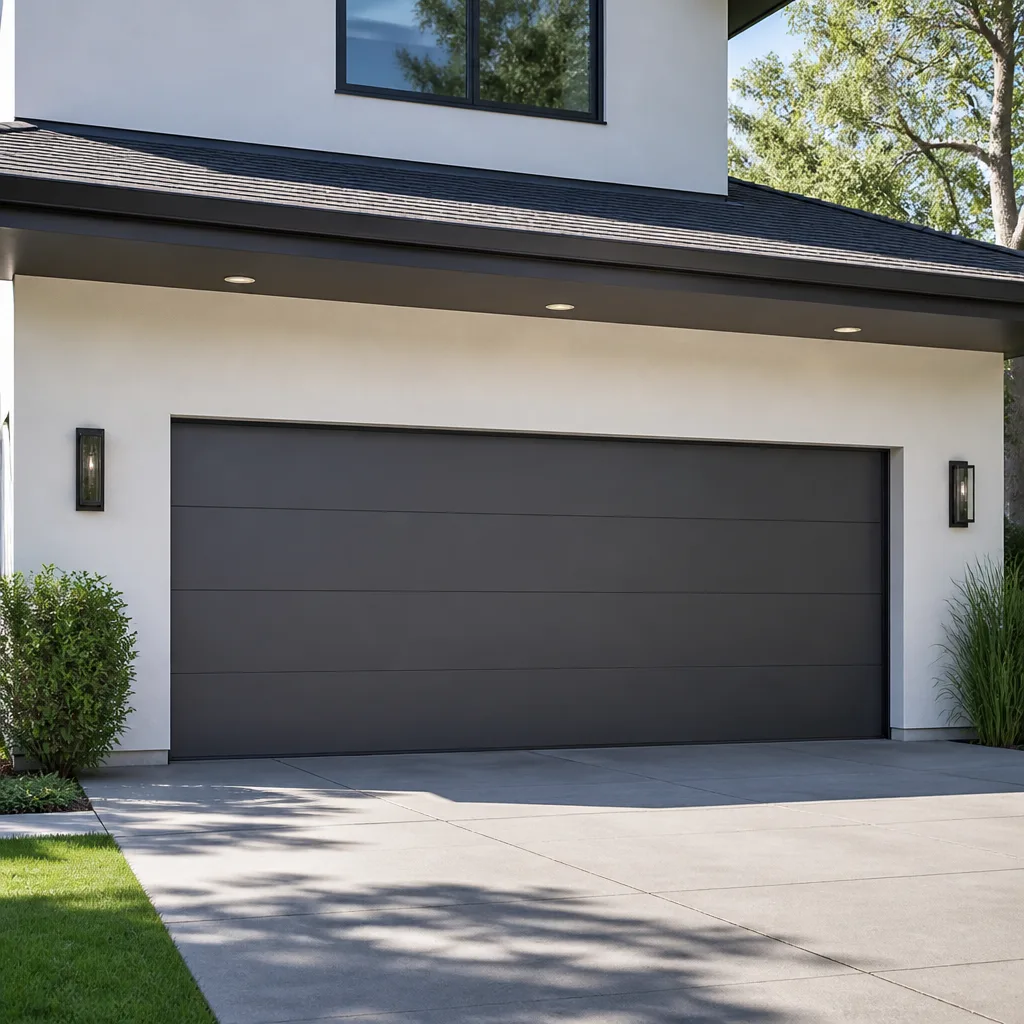 Modern flush
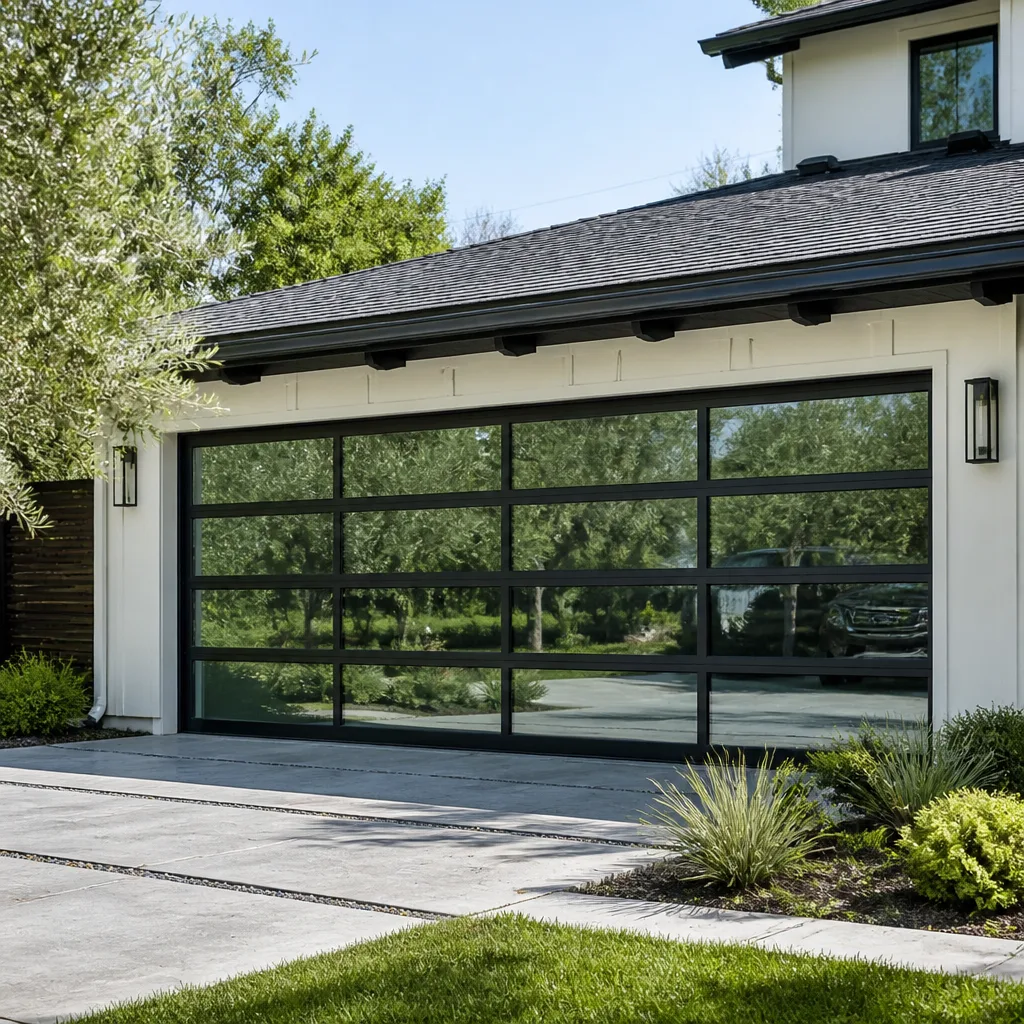 Full-view glass
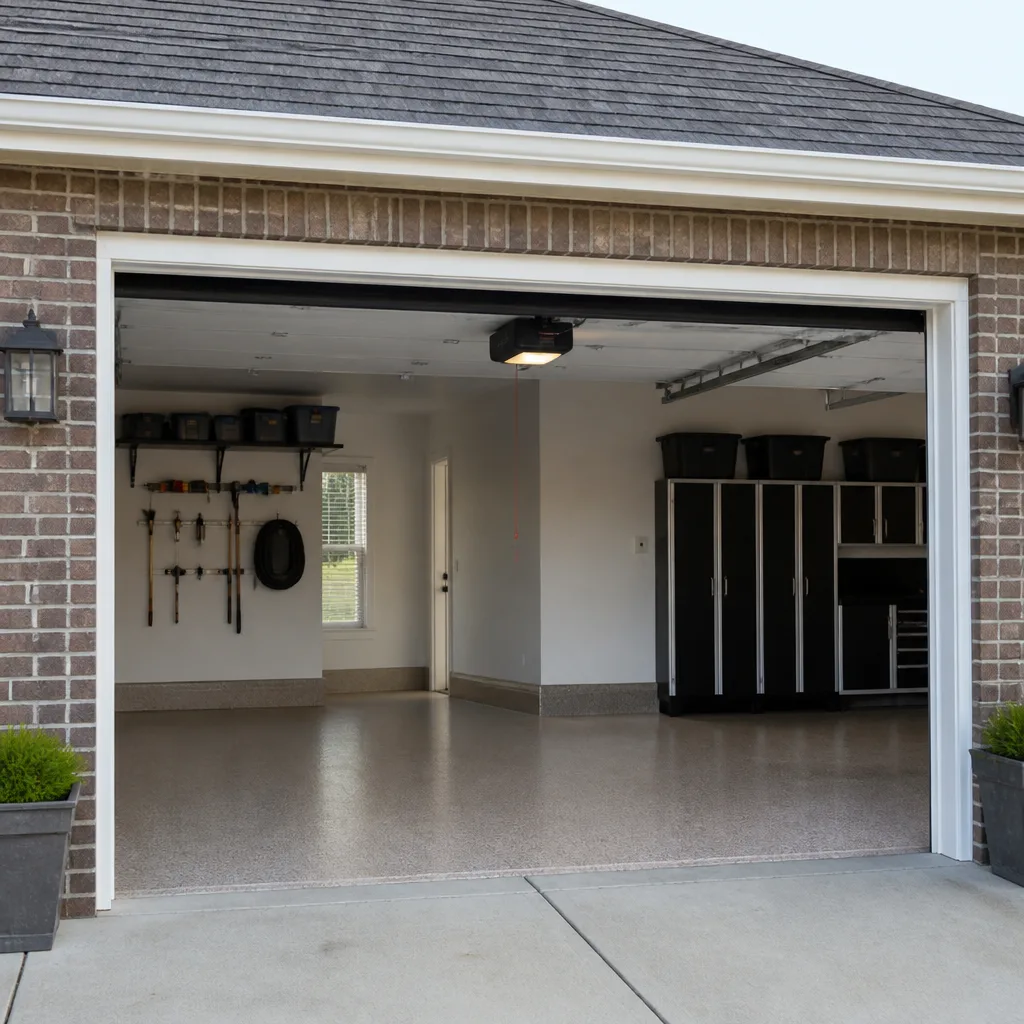 LiftMaster openers
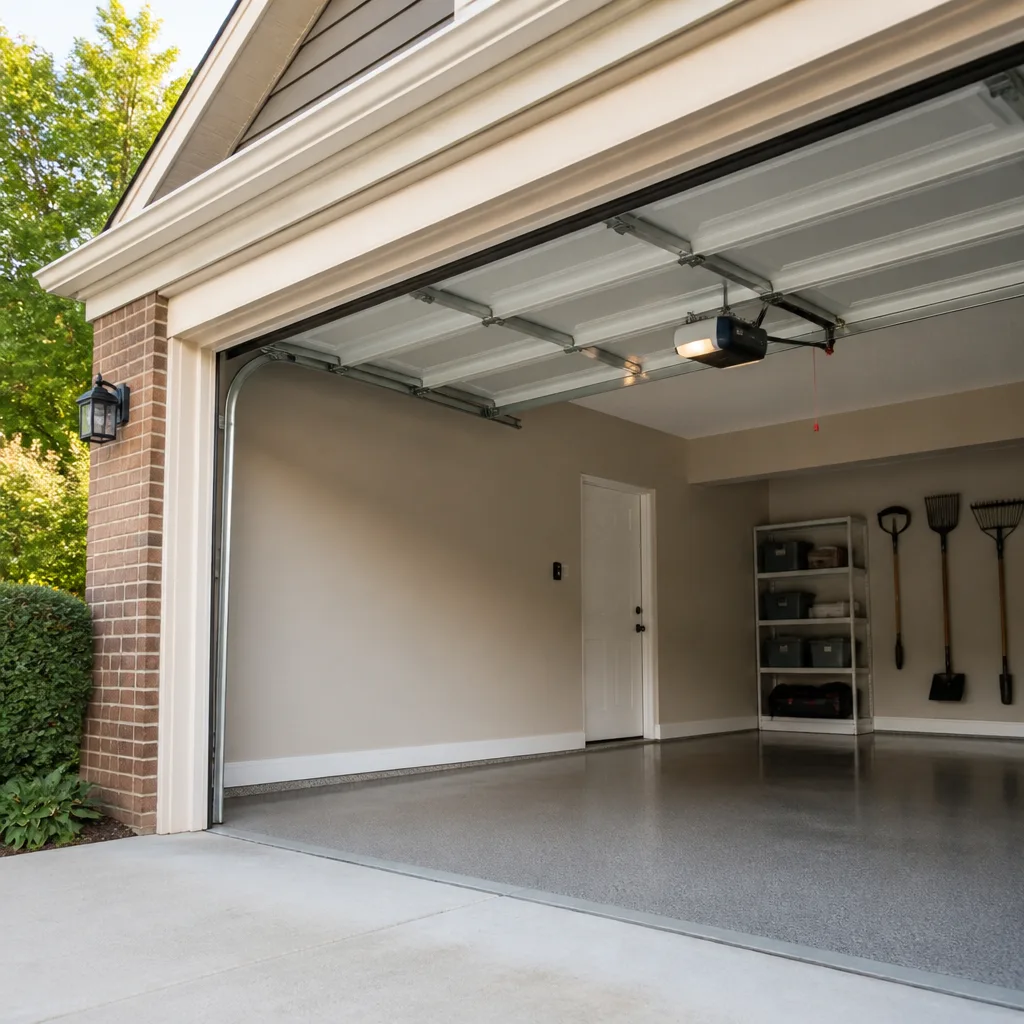 Chamberlain openers
Full 25-point door and opener safety check with every visit - springs, cables, rollers, tracks, and your LiftMaster or Chamberlain opener included
You get a price before we start. It does not change when the pro arrives.
Get your free estimateGarage Door Repair Troubleshooting in Provo: Common Problems and How to Fix Them
A door that reverses before it touches the ground and a door that won’t move at all look like the same problem from the driveway. They aren’t. One is usually a safety sensor or a limit switch telling the opener to back off, and the other is often a spring, a cable, or a dead logic board. Confuse the two and you’ll buy the wrong part, or worse, put your hands into a torsion system that can hurt you. In this guide we’ll walk through the four systems inside every door, map each symptom to the part actually at fault, and show you where safe troubleshooting ends in Provo and a technician needs to take over.
Quick Answer
Most garage door problems come down to one of four systems: the springs, the cables, the tracks and rollers, or the opener’s logic and safety settings. A door that reverses before closing is almost always an opener or sensor issue, while a door that won’t lift at all usually points to a spring or cable. Anything involving torsion springs or high-tension cables should go to a trained technician right away. Call (877) 526-0732 for a free estimate in Provo. We answer 24/7.
Styles & brands we work with
- Raised-panel steel
- Carriage house
- Modern flush
- Full-view glass
- LiftMaster openers
- Chamberlain openers
Table of Contents
- The Four Systems Inside Every Garage Door
- The Symptom-to-System Diagnostic Matrix
- Door Reverses Before It Closes
- Grinding, Squealing, and Binding
- Door Moves Partway and Stops
- Door Won’t Respond at All
- How Provo’s Elevation and Temperature Swings Affect Your Door
- Worn Out vs. Misaligned: Why It Changes the Price
- Where Safe DIY Ends: Stop-Here Thresholds
The Four Systems Inside Every Garage Door
Every residential door, whatever the brand on the panel, is really two separate machines working together. The door itself is a mechanical assembly of panels, springs, cables, tracks, and rollers. The opener is a motorized drive system with its own logic board, safety sensors, and force limits. Understanding that split is the single most useful thing you can know before you troubleshoot a thing.
The four systems break down like this:
- Springs. Torsion springs on a shaft above the door, or extension springs alongside the tracks. They counterbalance the door’s weight. When one fails, the door suddenly feels heavy or won’t lift. This is the most dangerous system to touch.
- Cables. Aircraft-grade steel cables running from the springs to the bottom corners of the door. They carry tension and keep the door square. A frayed or jumped cable is a safety issue, not a DIY fix.
- Tracks and rollers. The guides and wheels the door rides in. Misalignment here causes grinding, binding, and gaps. These are the most forgiving parts to inspect and adjust.
- Opener logic and safety. The motor, the belt, chain, or screw drive, the logic board, and the two photo-eye sensors near the floor. Most “my door won’t close” calls trace back here.
We work on all four systems every day, across LiftMaster, Chamberlain, Genie, Clopay, Amarr, Wayne Dalton, Craftsman, and Raynor. Eight brands, one specialist. That matters in Provo because the housing stock here is a mix: older homes with original doors and retrofit openers, newer builds with matched Clopay or Amarr panels and modern belt drives. The brand on your door tells us a lot about what’s likely to fail.
The Symptom-to-System Diagnostic Matrix
Before you touch anything, match the symptom to the system. This table is the quickest way to know whether you’re looking at a ten-minute adjustment or a technician call.
| Symptom | Most Likely System | Typical Fix |
|---|---|---|
| Door reverses before touching the floor | Safety sensors or travel limits | Realign sensors, adjust down-limit |
| Loud grinding or squealing | Tracks, rollers, or opener drive | Lubricate, realign track, inspect belt/chain |
| Door lifts a foot then stops | Spring tension or force setting | Spring replacement or force adjustment |
| Door won’t move at all, opener hums | Spring, cable, or stripped gear | Technician diagnosis |
| Opener clicks but nothing moves | Logic board or capacitor | Opener repair |
| Door is crooked, one side hangs low | Cable or spring imbalance | Technician diagnosis |
| Remote or wall button won’t work | Opener logic, battery, or wiring | Reprogram, test board |
Read the row that matches what you’re seeing, and you’ll know whether you’re dealing with a logic problem or a mechanical one. That single distinction saves most Provo homeowners from buying a part they don’t need.
The mistake we see most is treating every problem as an opener problem. If the door is heavy, the opener isn’t failing. It’s fighting a broken spring, and running an opener against a dead spring can burn out the motor or strip the drive gear. If the door feels unusually heavy when you lift it by hand, stop and treat it as a spring issue.
Door Reverses Before It Closes
A door that reverses on its way down is the most common call we get. It’s also usually one of the easiest to diagnose. The opener is being told to back off, and there are only a few things that tell it to.
Work through these in order:
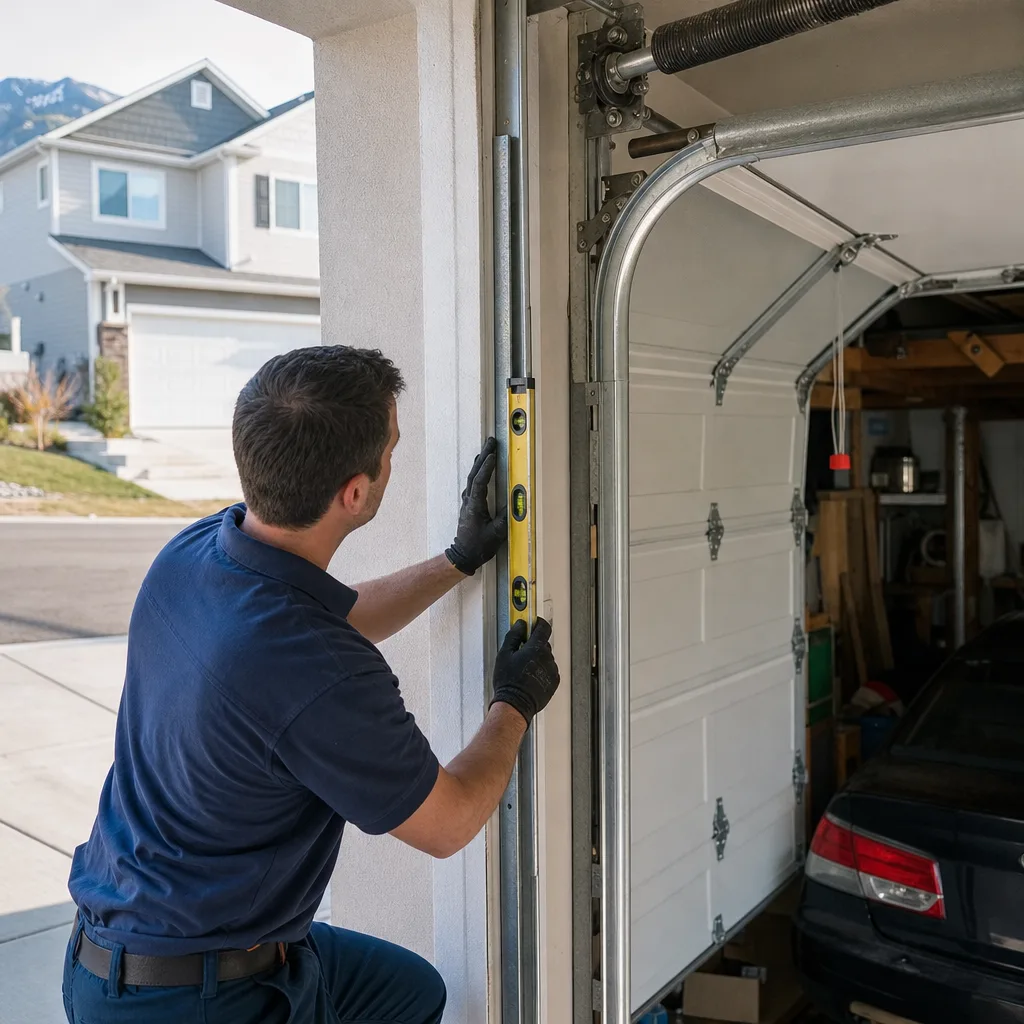
- Check the photo-eye sensors. The two small lenses near the floor on each side of the door must see each other. Wipe them clean, confirm the indicator light glows steady on both, and make sure nothing (a broom, a recycling bin, a snow shovel) is in the beam. Misalignment from a bumped track causes most reversals.
- Check the down-limit setting. If the door reverses very close to the floor, the opener thinks it’s hitting an obstruction. On LiftMaster and Chamberlain openers, the down-limit is adjusted on the side or back of the motor head; on Genie units it’s typically a screw on the power head.
- Look for friction. A track bent just slightly inward or a roller that’s worn flat can create resistance the opener reads as an obstruction. Run the door by hand (disconnect the opener first using the release cord) and feel for binding.
- Check the force setting. The opener has a force limit that tells it how hard to push before giving up. If it’s set too sensitive, a slightly heavier door on a cold morning trips it.
In Provo, the cold-morning reversal is real. Doors that work fine all summer can start reversing in winter because the metal contracts and the grease thickens. If the problem shows up only on cold days, that’s a strong hint you’re looking at a force setting or lubrication issue, not a failed component.
Grinding, Squealing, and Binding
Noise is your door telling you where the friction is. A low grinding from the tracks is different from a high squeal at the opener head, and they lead to different fixes.
- Grinding along the tracks: usually a bent track or a seized roller. Inspect the tracks by sighting down them like a rifle barrel; a bend shows up as a kink. Rollers should spin freely by hand.
- Squealing at the opener: worn belt, dry chain, or a dry torsion shaft. A chain drive needs periodic lubrication; a belt drive usually doesn’t squeal unless the belt is glazed or the sprocket is worn.
- Rattling and clunking: loose hinges, a loose bottom bracket, or a torsion spring that’s lost tension. Loose hardware is a straightforward tighten, but a bottom bracket under cable tension is not something to loosen.
- Metal-on-metal scraping: a roller that’s popped out of the track or a track that’s pulled away from the jamb. This is a stop-and-call situation because the door can come down off the track.
For Provo homes, the biggest noise culprit we see is dry torsion hardware. The dry summers and big day-to-night temperature swings pull lubricant out of hinges and rollers faster than in a coastal climate. A light application of a proper garage door lubricant (not WD-40) on the hinges, rollers, and torsion shaft quiets most doors without any parts at all.
If you’ve lubricated and the grinding persists, the problem is mechanical, not maintenance. That’s the point where an adjustment or a worn part needs attention.
Door Moves Partway and Stops
A door that lifts a foot or two and then stops is showing you an imbalance. Either the springs aren’t doing their job or the opener’s limits are set wrong. Here’s how to tell which.
- Disconnect the opener. Pull the release cord so the door is manual. Lift it halfway by hand and let go. A properly balanced door holds position. A door that drops is under-sprung; a door that flies up is over-sprung.
- Listen to the opener. If the opener hums but the door doesn’t move, the drive is disconnected or the gear is stripped. If the opener runs and the door moves partway then the opener shuts off, it’s a limit or force setting.
- Check both springs. On a two-spring door, one broken spring will let the door move a short distance before the remaining spring can’t carry the weight. Broken torsion springs usually show a visible gap in the coil.
- Look at the cables. A cable that’s come off its drum will let one side of the door rise while the other stays put. This is dangerous; don’t run the opener again.
In our experience, partial movement on a door that ran fine yesterday is a broken spring more often than anything else. That’s a technician job, and we’ll say so plainly. Repair or replace, we’ll tell you which one actually makes sense for the door you have.
Door Won’t Respond at All
When nothing happens at all, you’re in opener logic territory. The door and springs may be perfectly fine, and the problem is that the opener isn’t getting or sending a signal.
Start with the simple checks, in this order:
- Power. Confirm the outlet the opener plugs into has power. A tripped GFCI in the garage cuts the opener without any warning light.
- Wall button vs. remote. If the wall button works but the remote doesn’t, the issue is the remote battery or the radio receiver. If neither works, it’s the opener.
- Lock mode. Many openers have a vacation lock that disables the remotes. Check the wall control for a lock indicator.
- Safety sensor obstruction. On many openers, a blocked sensor stops the door from closing but not from opening. If nothing moves at all, keep looking.
- Logic board or capacitor. If the opener clicks once and does nothing, or hums without moving, you may have a failed logic board or start capacitor. This is a common failure point on older Craftsman and Genie units, and it’s where dedicated garage door opener repair earns its keep.
Opener repair is a separate discipline from door repair. A general handyman may not have the tester or the model-specific knowledge to isolate a logic board failure from a stripped gear, and guessing wrong means paying twice. We treat opener diagnostics as its own service line because the two systems fail in completely different ways.
How Provo’s Elevation and Temperature Swings Affect Your Door
Provo sits at roughly 4,500 feet in the Utah Valley, and the local climate gives garage doors a specific kind of wear that you won’t find in a flatland troubleshooting guide. Two things matter most: temperature swings and dry air.
Day-to-night temperature swings in Provo can be large, especially in spring and fall. Metal expands and contracts with those swings, and a spring that’s calibrated to a warm door behaves differently on a cold one. A torsion spring’s lifting force drops as the steel gets cold, which is why a door that closes fine all summer suddenly reverses in January. The force setting that was correct in July may be too sensitive in December. This is why we calibrate spring tension and test the door’s balance at the temperatures it actually runs in, not just on a mild afternoon.
The dry air in the valley pulls lubricant out of hinges, rollers, and tracks faster than in a humid climate. Doors in Provo need periodic lubrication more often than the manufacturer’s general recommendation might suggest. Dry rollers seize, seized rollers drag, and a dragging door trips the force limit. That’s the chain that leads from “my door is a little noisy” to “my door reverses every morning.”
Neighborhoods around Provo vary in how much this shows up. Older homes near downtown and the tree Streets area tend to have original wooden or older steel doors with retrofitted openers, which means mismatched force settings. Newer builds in the Edgemont and Grandview areas usually have matched Clopay or Amarr doors with modern belt drives; those see fewer mechanical issues but more logic board and sensor problems. If you’re not sure which category your home falls into, Provo is a compact enough city that a quick look at the door tells us a lot.
One more local factor: Provo’s winters bring snow that gets tracked into the garage and refreezes at the bottom seal. A door that’s crushed a block of ice at the bottom seal can bend the bottom bracket and pull a cable off. Clear ice and snow from the door’s path before running it after a storm.
Worn Out vs. Misaligned: Why It Changes the Price
One of the biggest cost differences in garage door repair comes down to a single question: is the part worn out, or is it just misaligned? Misaligned parts usually need an adjustment. Worn-out parts need replacement. The difference is often significant, and knowing which you have keeps you from paying for a part you didn’t need.
Here’s how to tell them apart:
- Misaligned: the track is straight but the door is off-center; the sensors are clean but pointed slightly wrong; the limit switch is off by a fraction. These are adjustments, and they’re usually quick.
- Worn out: a roller is flat-spotted or missing its bearing; a hinge is bent; a spring has a visible break; a cable has frayed strands. These need parts.
- Worn but working: a slightly noisy roller or a hinge with a little play. Lubrication extends the life, but replacement is coming. Worth planning for, not urgent.
An opener can also be “misaligned” in a logical sense. A logic board that’s receiving a bad signal from a misaligned sensor isn’t failed; it’s doing exactly what it should. Before diagnosing a bad board, any good technician will test the sensors and the wiring first. That’s why we don’t quote a board until we’ve confirmed it.
The cost difference is real. An adjustment is a fraction of the price of a replacement, and a lot of the “your opener is dead” calls we get end up being a sensor alignment or a loose wire. If you want a straight answer on which you’re facing, our garage door repair service starts with diagnosis, and the written estimate sets the final price before any work begins.
Where Safe DIY Ends: Stop-Here Thresholds
We’re all for homeowners handling the simple stuff. Lubrication, sensor cleaning, and remote battery swaps are safe and worth doing yourself. But garage doors have two components that cause serious injuries every year, and they aren’t the ones most people worry about.
Stop and call a technician if any of these are true:
- You’re considering touching a torsion spring. The torsion spring above your door stores enough energy to lift a small car. It’s under constant tension and releasing it without the right winding bars and technique can break bones. This is never a DIY job.
- A cable is loose, frayed, or off its drum. Cables are under the same tension as springs. A snapped cable can whip with enough force to cut.
- A spring is visibly broken. A gap in the coil means replacement, not repair, and both springs on a two-spring door are typically replaced together. We quote per spring, and a matched pair runs about twice a single spring, so plan for both.
- The door is off its track or hanging crooked. Running the opener can bring the whole door down.
- You smell burning from the opener head. That’s a motor or board failure. Disconnect power and call.
- You’ve adjusted the force setting twice and it still reverses. Repeated force adjustments are masking a mechanical problem, and running the opener against it wears out the drive.
For anything on this list, the safe move is to stop, disconnect the opener (pull the release cord if it’s safe to do so), and call a technician. We’d rather tell you your door needs a $40 adjustment than have you learn the hard way that a spring is not a part to experiment with.
We also want to flag one non-safety risk: mismatched parts. A door with a modern opener and an old door panel may have force and limit settings that don’t line up with the manufacturer’s spec. Adjusting a Chamberlain opener to work on a 30-year-old Wayne Dalton door is possible but requires model-specific knowledge that a general guide can’t give you.
Common Mistakes to Avoid
- Spraying WD-40 on your hinges and rollers. WD-40 is a solvent, not a lubricant, and it strips the grease that’s protecting the parts. Use a garage-door-specific lubricant on the torsion shaft, hinges, and rollers instead.
- Forcing a door that won’t respond. If the opener won’t move the door, don’t hold the button down and hope. Running an opener against a broken spring or jammed track burns out the motor or strips the drive gear.
- Adjusting the force setting over and over. If your door reverses and you turn up the force, you’re hiding the real problem. The force setting should be adjusted once, then left alone unless something changes.
- Replacing only one spring on a two-spring door. The second spring is the same age and has the same wear. The first will usually fail soon after the replacement, so matched pairs are the standard practice.
- Ignoring Provo’s freeze-thaw cycle. A path of ice at the bottom of the door bends brackets and pulls cables. Clear it before you run the door, and check the bottom seal after every hard freeze.
- Assuming a new opener will fix a heavy door. If the door is heavy, the problem is the door’s springs, and a new opener will just fail faster. Diagnose the mechanical system first.
- Reprogramming a remote without checking the safety sensors. Sensors and remotes are separate problems. A blocked sensor won’t respond to a remote fix, and a dead remote won’t respond to a sensor fix.
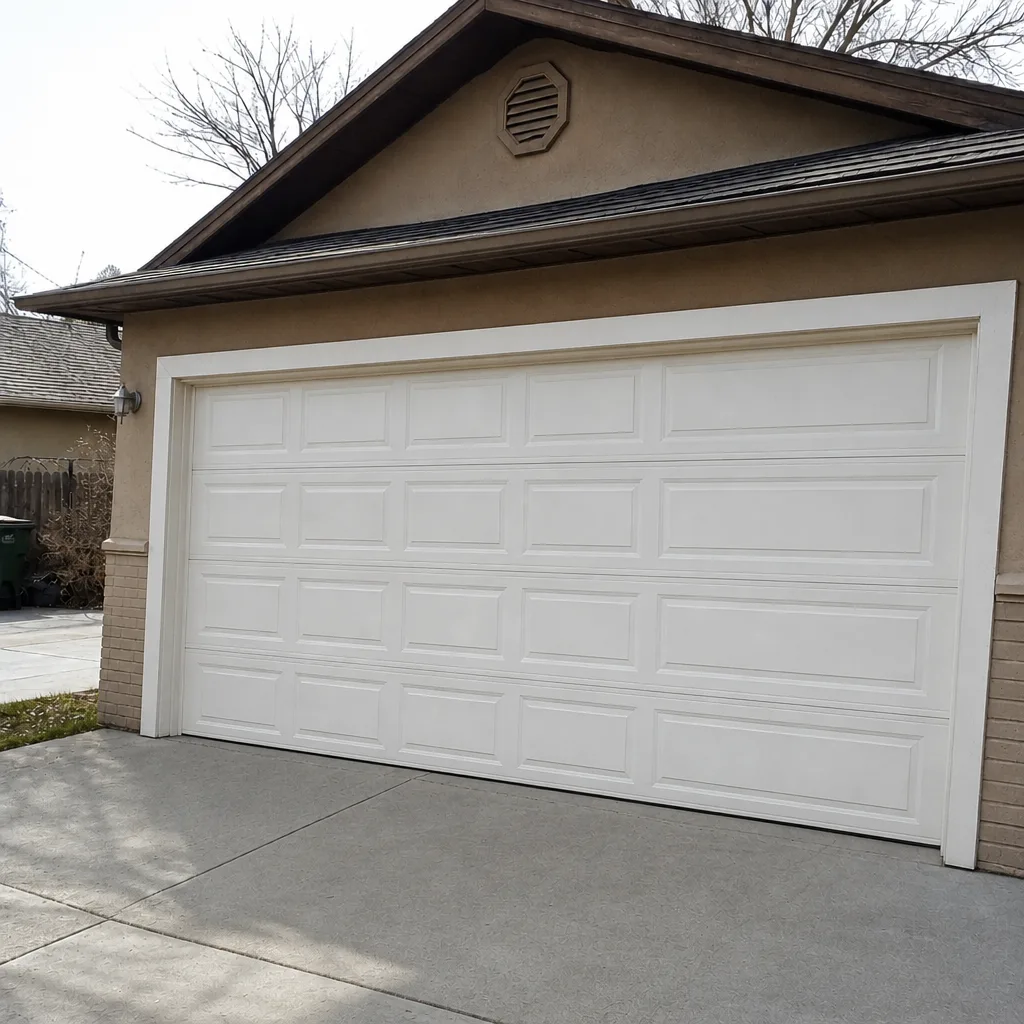
See the difference
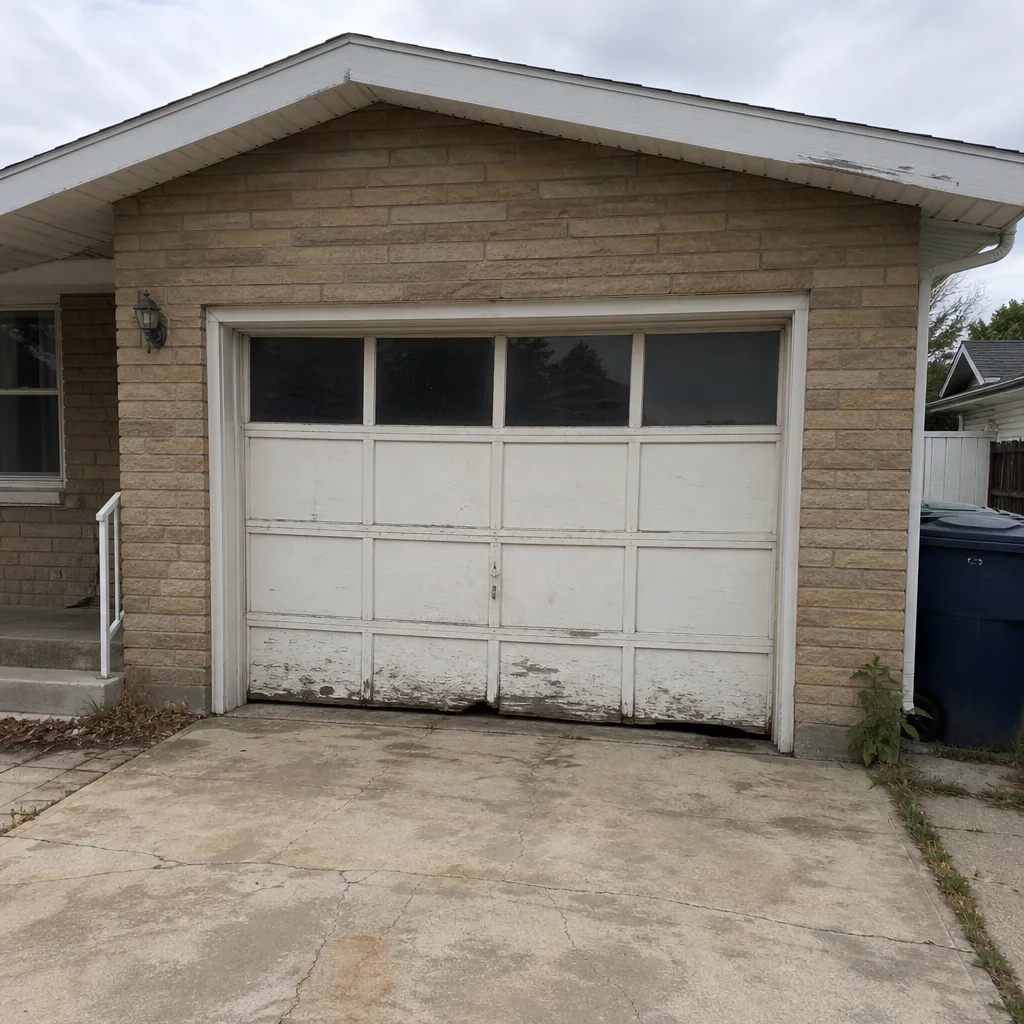 Before
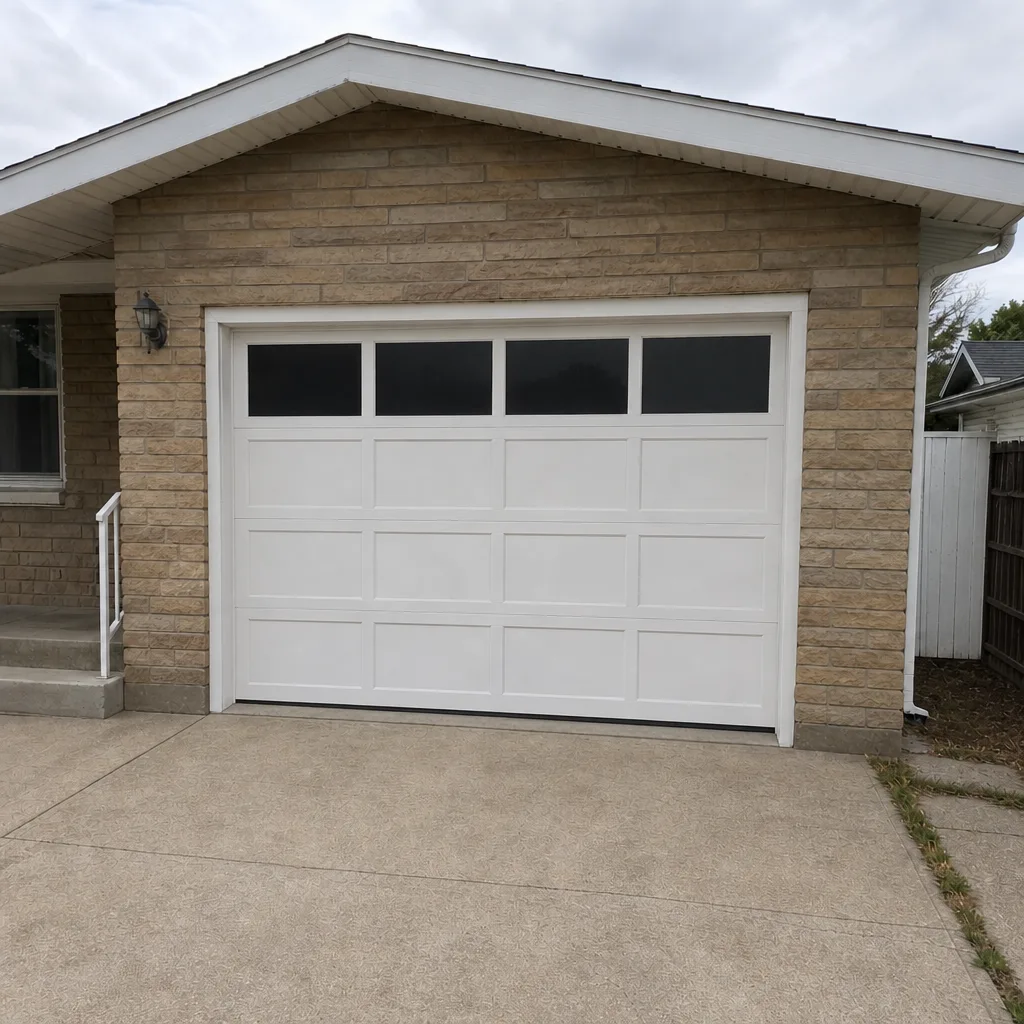 After
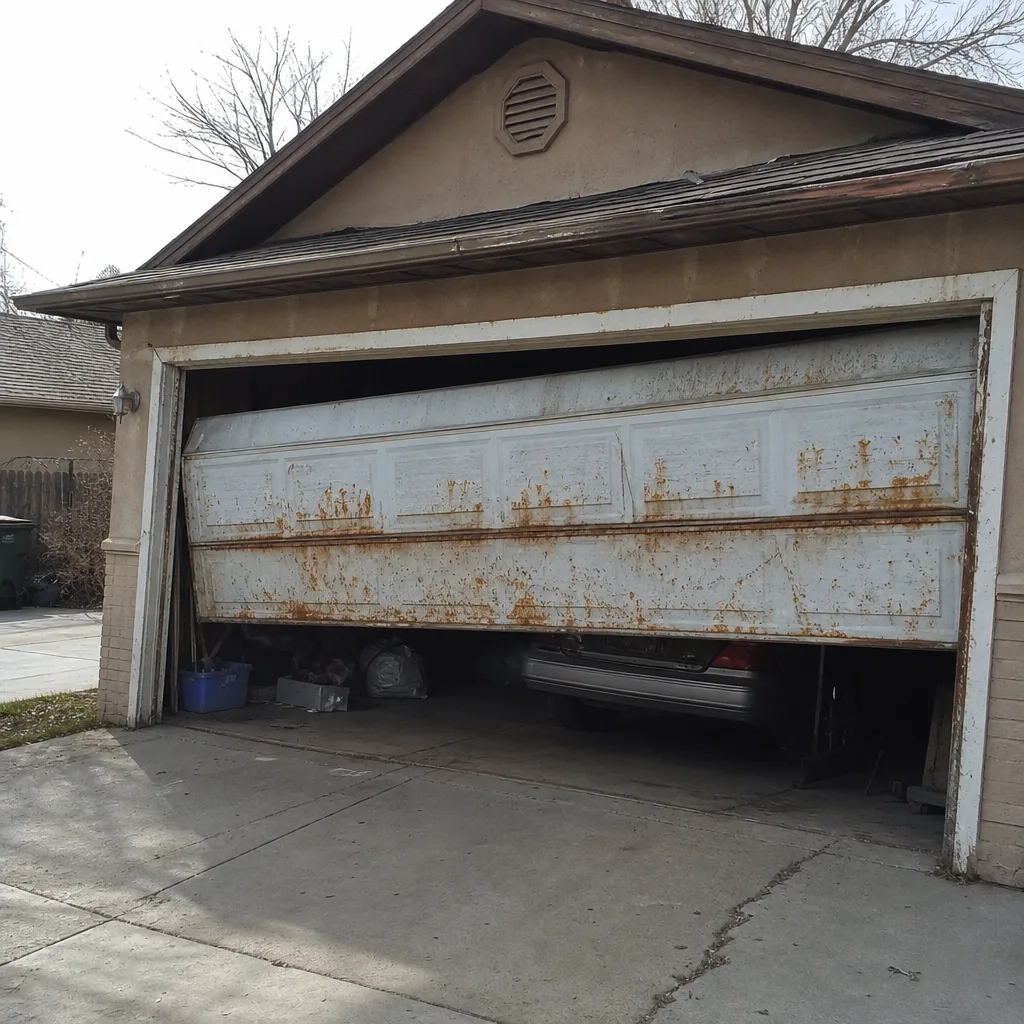 Before
 After
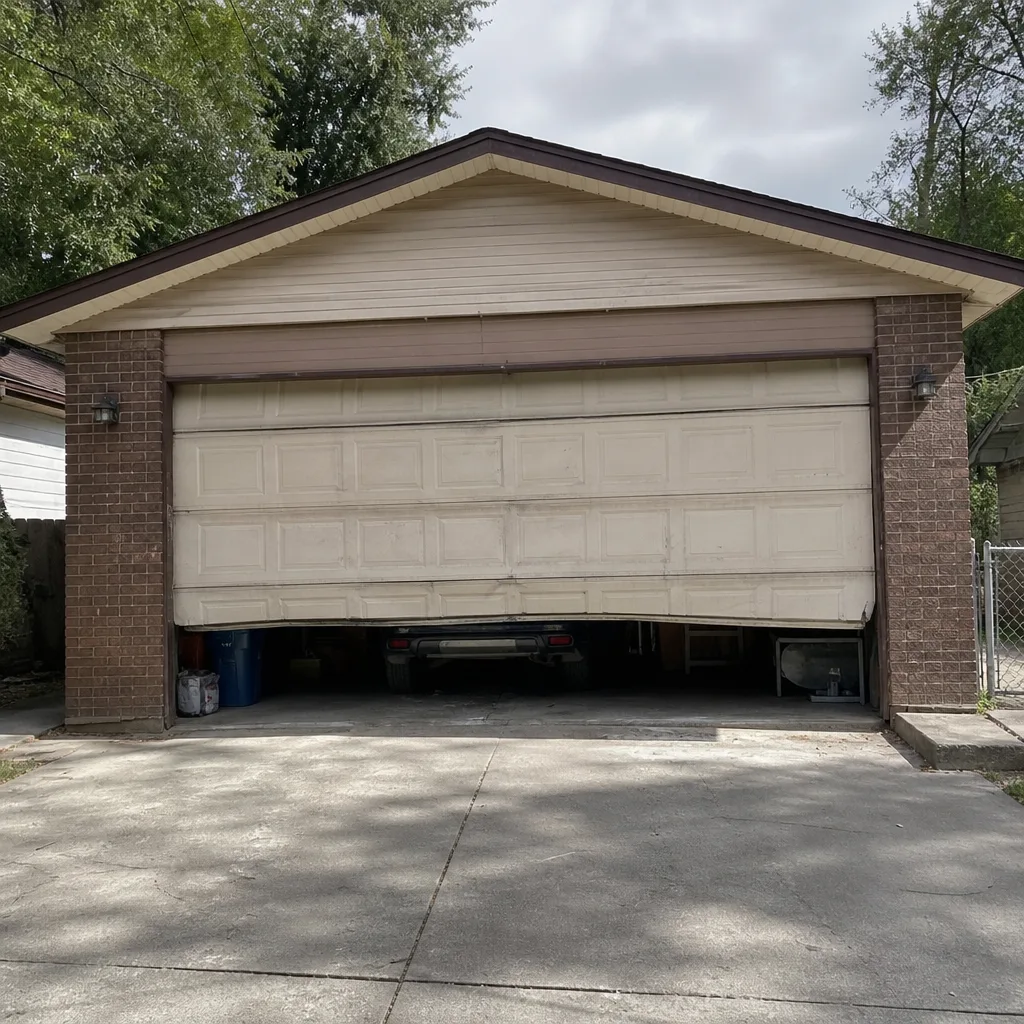 Before
 After
When to Call a Professional
Call a technician the moment your troubleshooting hits springs, cables, or any part that’s under tension. That’s the boundary between a safe DIY fix and a trip to the emergency room. Also call if your door is off its track, if the opener is humming without moving, if you smell burning from the opener head, or if you’ve adjusted the force and limit settings twice and the door still misbehaves.
For issues outside those boundaries, the decision is often about time and confidence. Sensor realignment, lubrication, and remote batteries are safe to try. If you’ve spent an hour on a problem and the door still isn’t working, the diagnosis is the job. Provo Garage Door Service offers free estimates in Provo, and we’ll tell you straight whether you’re looking at an adjustment or a replacement. Call (877) 526-0732. We answer 24/7. Fast dispatch from 7am to 7pm, Sunday through Friday. Our technicians have up to 14 years of experience and work on all eight major brands, so your door’s brand is unlikely to be a problem.
Frequently Asked Questions
A door that reverses before closing usually has a misaligned or dirty safety sensor, or a down-limit set too high. Clean the two lenses near the floor, confirm both indicator lights glow steady, and check that nothing is in the beam. If the door only reverses on cold mornings, it’s likely a force or limit setting affected by temperature. Call (877) 526-0732 for an exact quote if it keeps happening – estimates are free.
A typical adjustment or sensor fix runs less than a spring replacement, and a single torsion spring replacement is the larger line item. We don’t publish fixed prices because doors vary, but we can tell you that a replacement part always costs more than a misalignment adjustment. The written estimate sets the final price before any work begins. Call (877) 526-0732 for an exact quote – estimates are free.
No. Torsion springs are under enough tension to cause serious injury, and cable work carries the same risk. This is a job for a trained technician with the right winding bars and safety equipment. A single spring is replaced as a pair because both springs wear at the same rate. Call (877) 526-0732 and we’ll explain what’s involved.
A door that’s hard to lift by hand has a spring problem, not an opener problem. A properly balanced door feels light and holds position when you let go halfway up. If it drops, the springs aren’t carrying the weight. Don’t run the opener against it; the motor will burn out. Call (877) 526-0732 for a diagnosis.
Yes. Cold steel holds less spring tension, and thick grease increases friction, so a door that’s balanced in July may feel heavy in January. That’s why a force setting that worked all summer can suddenly trip in winter. A proper tune-up in fall, with lubrication and a balance check, prevents most of these cold-morning reversals. Call (877) 526-0732 if your door only misbehaves in cold weather.
It can, because door panel manufacturers and opener manufacturers are separate systems. We work with the door brands (Clopay, Amarr, Wayne Dalton, Raynor) and the drive brands (LiftMaster, Chamberlain, Genie, Craftsman), so a mismatched setup isn’t a problem. If your door or opener is one of those brands, we’re familiar with it. Call (877) 526-0732 for an estimate.
The Bottom Line
Most garage door problems fall into four systems: springs, cables, tracks and rollers, or opener logic. A door that reverses before closing is almost always a sensor or limit issue, while a door that won’t lift at all usually points to a spring or cable. Provo’s elevation and dry air mean springs need calibration for the local temperature swing and rollers need more frequent lubrication than a generic guide suggests. Know where safe DIY ends at the torsion spring and high-tension cable, and don’t be shy about calling once you’ve hit that line.
When you’re ready for a straight answer, call (877) 526-0732 for a free estimate. Provo Garage Door Service covers the whole door lifecycle, from repair to opener diagnostics to new installation. We answer 24/7. Fast dispatch from 7am to 7pm, Sunday through Friday.
Written by the team at Provo Garage Door Service.